Cameras on Poles: Why Manual Cleaning Gets Skipped
Camera cleaning on poles is one of the most commonly overlooked maintenance tasks in real-world surveillance systems. Not because teams do not care about visibility, but because accessing these cameras is often inconvenient, time-consuming, and sometimes risky.
As a result, cameras mounted on poles are more likely to stay dirty longer than expected. Therefore, camera cleaning on poles should be treated as a visibility risk, not just a maintenance detail.
Why pole-mounted cameras are harder to maintain
Pole-mounted cameras are often installed where coverage is needed, not where access is easy. They are commonly used for:
- perimeter monitoring
- traffic observation
- yard coverage
- access points
- large open industrial areas
However, reaching these cameras usually requires more effort than wall-mounted or easily accessible units.
Typical challenges include:
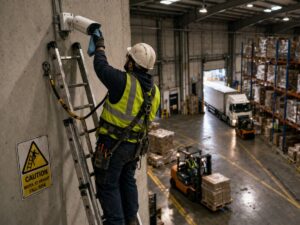
- ladder or lift equipment
- safety procedures
- uneven ground conditions
- distance from main maintenance areas
- weather exposure
Because of that, even a simple cleaning task becomes a planned activity rather than a quick action.
Why cleaning gets delayed or skipped
In busy operations, maintenance teams must prioritize tasks. When camera cleaning competes with urgent repairs, production work, or safety issues, it often moves down the list.
As a result:
- slightly dirty cameras are ignored
- cleaning is postponed
- visibility gradually declines
- the problem becomes normalized
Eventually, teams may only respond when the image becomes clearly unusable.
This is exactly why camera cleaning on poles is often inconsistent rather than systematic.
Why “not urgent” becomes a real problem
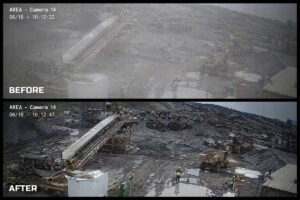
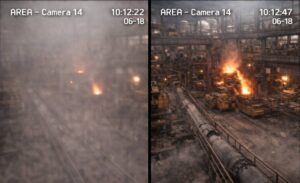
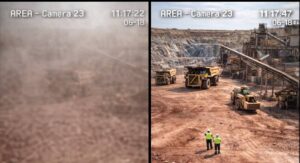
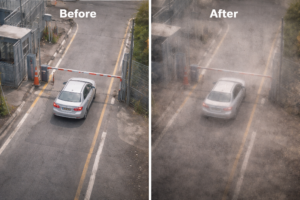
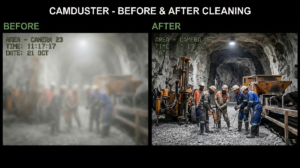
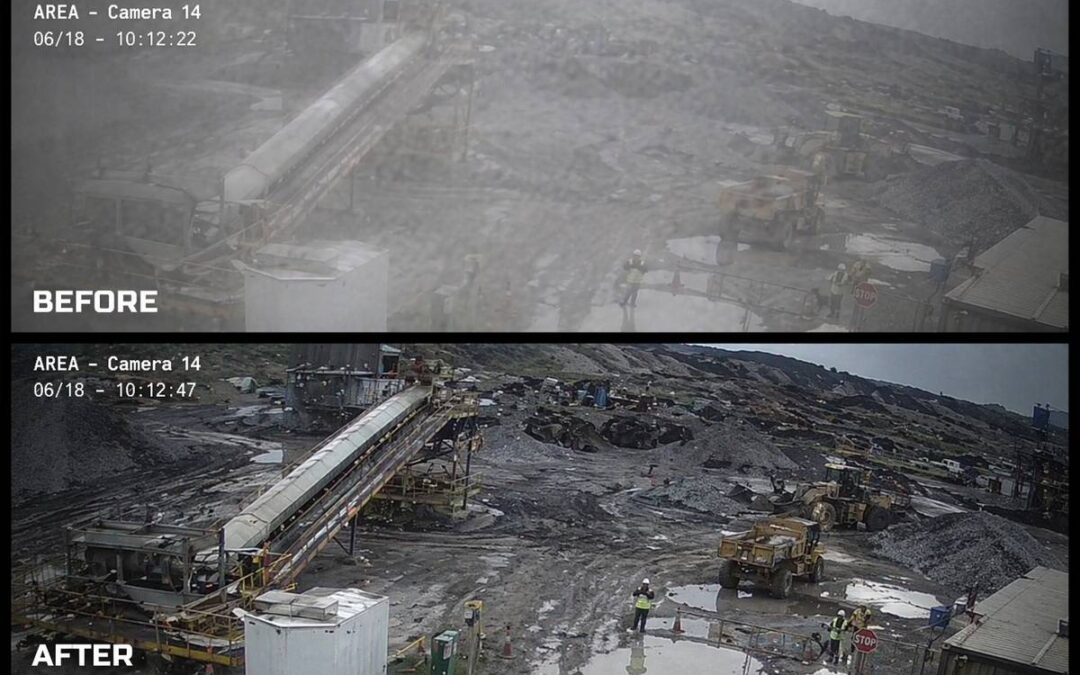
A camera does not need to be completely blocked to lose value. Even moderate contamination can:
- reduce contrast
- soften details
- affect identification tasks
- weaken monitoring confidence
- slow down incident review
However, because the camera is still online, the issue may not feel urgent. Consequently, the site operates with reduced visibility without realizing how much performance is being lost.
Why access cost discourages frequent cleaning
Each cleaning visit to a pole-mounted camera involves more than just wiping the lens. It often includes:
- bringing access equipment
- setting up safely
- allocating technician time
- coordinating with operations
- repeating the process later
So even if the cleaning itself takes only minutes, the full effort makes frequent maintenance less attractive.
That is why camera cleaning on poles often becomes reactive instead of preventive.
Why contamination returns anyway
Even after cleaning, the environment does not change. Cameras on poles are exposed to:
- airborne dust
- wind-driven debris
- insects and cobwebs
- weather conditions
- nearby traffic or operations
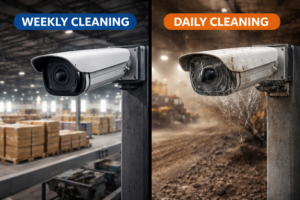
As a result, the same cameras tend to get dirty again, creating a cycle of:
clean → delay → degraded image → cleaning visit → repeat
This cycle increases both maintenance effort and visibility gaps.
How CAMDUSTER helps pole-mounted cameras
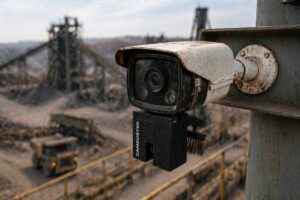
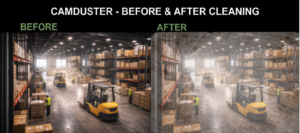
CAMDUSTER is a camera cleaning robot designed to help supported cameras stay clearer without relying on repeated manual access. Instead of waiting for a technician to climb or reach the camera, sites can maintain visibility more consistently through a preventive approach.
This matters because the biggest issue with pole-mounted cameras is not cleaning once. It is the difficulty of cleaning them again and again.
CAMDUSTER can help support:
- reduced need for ladder or lift access
- fewer skipped or delayed cleaning tasks
- more consistent image clarity
- lower maintenance effort for high-mounted cameras
- better use of installed surveillance systems
Therefore, camera cleaning on poles becomes more manageable when the site reduces dependence on manual intervention.
Where this issue is most visible
Pole-mounted camera challenges are especially common in:
Perimeter lines
Long distances and exposure make regular cleaning difficult.
Large yards and industrial sites
Cameras are spread out, increasing travel and effort.
Traffic monitoring points
Dust and movement increase contamination frequency.
Remote or outdoor installations
Weather and debris accelerate buildup.
Case study: a perimeter camera that stayed dirty too long
At one site, several perimeter cameras mounted on poles were rarely cleaned unless visibility became clearly unacceptable. Although the cameras remained operational, the image quality often declined gradually due to dust and environmental exposure.
Maintenance teams were aware of the issue, but cleaning required planning, equipment, and time. As a result, the task was repeatedly postponed.
Over time, the site realized that the problem was not one dirty camera, but a pattern: cameras that were difficult to access were also the ones most likely to be neglected.
After shifting toward a more preventive cleaning approach, the site improved visibility consistency and reduced the number of delayed maintenance actions.
This highlights a key point: access difficulty often determines cleaning frequency more than actual need.
A smarter approach to pole-mounted camera maintenance
If your site has cameras mounted on poles, it is worth reviewing how often they are actually cleaned versus how often they should be.
A stronger approach usually includes:
- identifying hard-to-access cameras
- tracking how long they stay dirty
- reviewing cleaning delays
- prioritizing high-visibility locations
- reducing reliance on manual access
In other words, the goal is not just to clean these cameras when possible. The goal is to keep them clear even when access is inconvenient.
Internal resources to explore
To learn more about improving camera maintenance efficiency, see:
- CAMDUSTER camera cleaning solutions
- Safety angle: fewer ladder climbs, fewer accidents
- Warehouse use case: constant airborne dust from traffic
Conclusion
Camera cleaning on poles is often skipped not because it is unimportant, but because it is difficult. However, that difficulty leads to delayed maintenance, reduced visibility, and repeated effort over time.
That is why a more preventive approach is essential. CAMDUSTER helps reduce the reliance on manual access, supports consistent camera clarity, and makes it easier to maintain visibility even in locations where cleaning is hardest to perform.
FAQ
Frequently Asked Questions
Why are cameras on poles harder to clean?
Because they require ladders, lifts, or special access, which makes each cleaning task more time-consuming and less convenient.
Do pole-mounted cameras get dirtier than others?
Often yes, because they are more exposed to dust, wind, weather, and airborne debris.
Why does cleaning get skipped so often?
Because maintenance teams prioritize more urgent tasks, and accessing these cameras requires extra effort and planning.
Is a slightly dirty camera really a problem?
Yes. Even light contamination can reduce contrast, detail, and overall image usefulness.
How does CAMDUSTER help with pole-mounted cameras?
CAMDUSTER reduces the need for repeated manual access by supporting more consistent, preventive cleaning.
Can this reduce ladder or lift usage?
Yes. By reducing manual cleaning frequency, it can lower the need for repeated access equipment use.
Where is this problem most common?
Perimeter lines, large yards, traffic areas, and remote outdoor installations.
Read more FAQs
Do weather conditions make the problem worse?
Yes. Wind, rain, and dust can accelerate contamination on exposed cameras.
How often should pole-mounted cameras be cleaned?
It depends on the environment, but they usually require more frequent attention than easily accessible cameras.
Can delayed cleaning affect security?
Yes. Reduced visibility can impact monitoring, identification, and incident response.
Is manual cleaning enough for long-term maintenance?
It works temporarily, but it often leads to repeated effort and inconsistent results.
Does camera height increase maintenance cost?
Yes. The higher the camera, the more effort and equipment are required for each visit.
Can CAMDUSTER be used on all pole-mounted cameras?
It is designed for supported camera types, helping reduce maintenance effort where access is difficult.
What is the biggest hidden issue with skipped cleaning?
Gradual visibility loss that goes unnoticed until the footage becomes unreliable.
Can preventive cleaning improve consistency?
Yes. It helps maintain stable image quality instead of reacting to problems late.
Why is access difficulty a key factor?
Because it directly affects how often maintenance is performed, regardless of how dirty the camera actually is.
#CAMDUSTER #CameraCleaningRobot #DirtyCameraLens #IndustrialSites #OperationalEfficiency