Remote Mining Cameras: Why Expensive Access Makes Preventive Cleaning Essential
Remote mining camera cleaning is often treated as a small maintenance task. However, on real mining sites, it is rarely small. When a camera is installed in a remote zone, the actual cleaning may take only a few minutes, yet the full maintenance visit can take far longer and cost far more.
That is why remote camera maintenance deserves closer attention. Dust, debris, weather exposure, and daily site activity can all reduce image quality. At the same time, the effort needed to reach those cameras keeps driving up labor and service cost. As a result, remote mining camera cleaning becomes a serious operational issue rather than a routine wipe-down.
Why remote mining cameras are expensive to maintain
Mining cameras are often installed where visibility is critical, not where access is easy. For example, cameras may be mounted along haul roads, perimeter lines, access gates, conveyor routes, loading areas, or isolated monitoring points. Consequently, simply reaching the camera can require significant time and planning.
In many cases, a cleaning trip includes:
-
travel across a large site
-
PPE and safety procedures
-
elevated access tools or vehicles
-
coordination with site operations
-
technician labor
-
repeat visits when contamination returns quickly
Therefore, the biggest expense is usually not the cleaning itself. Instead, it is the total cost of access.
Why access cost matters more than lens cleaning time
A dirty lens can often be wiped clean in minutes. Nevertheless, that does not reflect the real job cost.
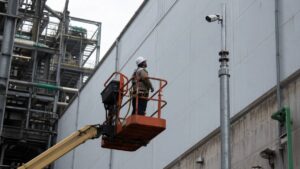
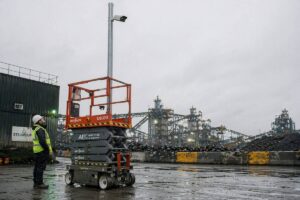
A technician may need to leave the main work area, travel to the camera, wait for access approval, follow site safety requirements, and then inspect the image after cleaning. In some locations, the work may also require ladders, lifts, escorts, or scheduled access windows. Because of that, each cleaning event becomes much larger than it first appears.
This is exactly why remote mining camera cleaning should be evaluated by total effort, not by how long the cloth touches the lens.
What causes repeat cleaning in remote mining zones
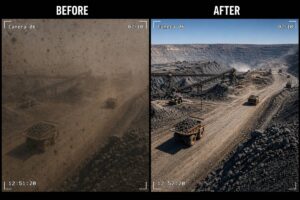
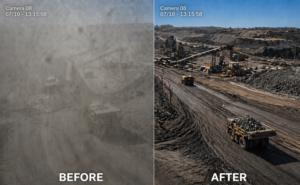
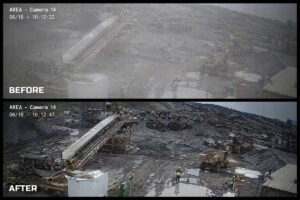
Remote mining cameras are exposed to contamination that often comes back quickly. Dust from haul roads, wind-driven particles, blasting residue, and nearby material movement can all settle on the camera lens area over time. As a result, the same camera may need attention again and again.
Common sources of repeat contamination include:
-
heavy vehicle traffic
-
haul road dust
-
stockpile and transfer debris
-
changing wind conditions
-
exposed outdoor mounting positions
-
seasonal dry conditions
So even when a camera is fully functional, the footage may still lose clarity because the viewing area does not stay clean for long.
Why poor visibility creates a bigger problem
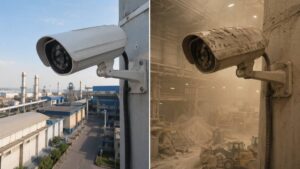
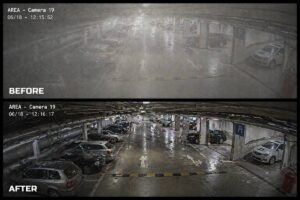
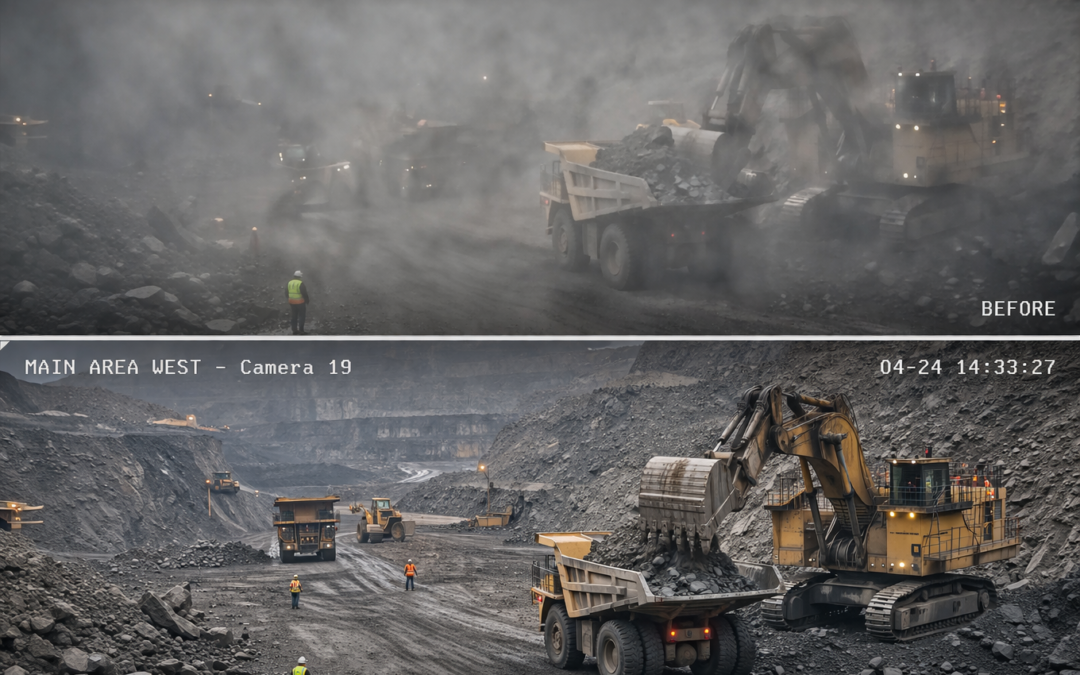
Dirty remote cameras do more than look neglected. They reduce the practical value of the surveillance system.
For example, a camera that monitors a haul-road crossing, remote entry point, or isolated process area may still be online while the image becomes too soft or dusty for reliable use. Consequently, operators may lose important visual detail exactly where they depend on remote visibility the most.
This can lead to:
-
blurry footage
-
reduced confidence in monitoring
-
slower incident review
-
missed visual details
-
delayed maintenance response
-
more repeated cleaning trips
In other words, the cost is not only maintenance. It is also the reduced usefulness of the camera itself.
Why reactive cleaning becomes inefficient
Many sites clean remote cameras only after image quality becomes obviously poor. Although that may seem practical, it often creates a repeating cycle.
First, the footage remains degraded until someone notices the problem. Next, a maintenance visit must be organized. Then, after the camera is cleaned, the same contamination may return because the environment has not changed. Consequently, the site keeps paying for repeated access rather than reducing the root maintenance burden.
That is why remote mining sites often benefit more from preventive cleaning than from reactive manual intervention.
How CAMDUSTER helps reduce remote cleaning burden
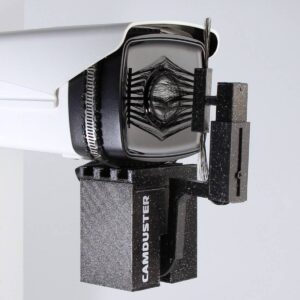
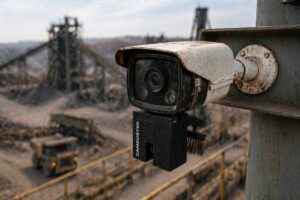
CAMDUSTER is a camera cleaning robot designed to help supported cameras stay clearer with less repeated manual intervention. Instead of relying only on technicians to travel out each time visibility drops, mining operators can move toward a more preventive maintenance approach.
This matters because the value of CAMDUSTER is not just one cleaning event. The real value is reducing the number of repeated service trips tied to recurring contamination.
For remote mining locations, CAMDUSTER can help support:
-
fewer repeat site visits
-
better maintenance efficiency
-
lower labor tied to routine cleaning
-
more consistent camera visibility
-
improved use of existing surveillance assets
Therefore, remote mining camera cleaning becomes more manageable when the site reduces how often it needs to send people to the same difficult location.
Where this use case is strongest
Some remote mining camera locations create especially high maintenance cost.
Haul roads
These cameras often face constant dust exposure and are spread across large distances. Therefore, service visits can consume significant time.
Remote gates and perimeter points
These locations are important for access control and security. However, they are often far from main maintenance areas.
Conveyor and transfer routes
Remote process cameras may be exposed to both contamination and access difficulty, especially on large sites.
Elevated monitoring positions
When cameras are mounted high in isolated areas, each cleaning visit can require extra equipment and safety preparation.
Case study: a remote haul-road camera with repeat cleaning cost
At one mining site, a camera monitoring a remote haul-road junction kept losing useful visibility because of recurring dust buildup. The camera remained online, but the footage became progressively harder to use for traffic observation and incident review.
Initially, the site relied on manual cleaning. However, every visit required technician travel across the operation, site coordination, and time away from other work. In addition, the dust returned quickly during dry weather and heavy traffic periods.
After reviewing the pattern, the site realized the largest cost was not the cleaning itself. Instead, it was the repeated access burden tied to the same camera. By shifting toward a more preventive cleaning strategy, the team reduced repeated interventions and improved visibility consistency at that remote point.
That is exactly where CAMDUSTER creates value: by reducing the operational drag of repeated manual cleaning in places where access is expensive.
A smarter maintenance strategy for remote mining cameras
If your site has cameras in isolated or difficult-to-access locations, it is worth reviewing which ones create the highest repeat maintenance burden.
A stronger approach usually includes:
-
identifying remote cameras with recurring contamination
-
tracking repeat cleaning frequency
-
calculating travel and access time per visit
-
prioritizing high-cost camera locations
-
reducing reactive service trips where possible
In other words, the goal is not simply to clean the lens once. The goal is to keep critical remote cameras usable with less repeated effort.
Internal resources to explore
To learn more about smarter camera maintenance, see:
Conclusion
Remote mining cameras are expensive to maintain because every cleaning visit includes much more than a quick wipe. Travel, safety preparation, access coordination, and repeat contamination all increase the real cost.
That is why remote mining camera cleaning should be managed as a preventive maintenance issue, not just a reactive cleaning task. CAMDUSTER helps mining sites support clearer visibility, reduce repeated access burden, and improve maintenance efficiency where camera access is hardest and most expensive.
FAQ
Frequently Asked Questions
Why is remote mining camera cleaning more expensive than standard camera cleaning?
Because the real cost includes travel across the site, PPE, safety procedures, access planning, and sometimes elevated access equipment. The cleaning itself may be quick, but the full visit is not.
Which remote mining cameras usually cost the most to maintain?
Haul-road cameras, remote gate cameras, perimeter cameras, conveyor-route cameras, and elevated cameras in isolated locations usually create the highest maintenance effort.
Can a remote camera still be online while the footage is unusable?
Yes. A camera may still be powered and recording while dust or debris on the lens area reduces the image enough to limit its practical value.
Why do remote mining cameras often need repeated cleaning?
Because they are exposed to recurring dust, wind-driven particles, traffic activity, and harsh environmental conditions. As a result, contamination often returns after manual cleaning.
How does CAMDUSTER help with remote mining camera cleaning?
CAMDUSTER supports a more preventive cleaning approach for supported cameras, helping reduce repeated manual cleaning visits and maintain clearer visibility in difficult-to-access areas.
Is CAMDUSTER useful only for very large mining operations?
No. Any mining site with remote cameras, difficult access, and recurring contamination can benefit from reducing repeated manual cleaning effort.
What is the biggest hidden cost of remote camera maintenance?
Many sites focus on the cleaning time, but the bigger cost is often travel, access coordination, safety preparation, and labor tied to repeated visits.
Read more FAQs
Can CAMDUSTER help reduce visits to isolated haul-road cameras?
Yes. It is especially valuable where repeated service trips consume significant time and labor because the camera location is far from central access points.
Does weather make remote mining camera contamination worse?
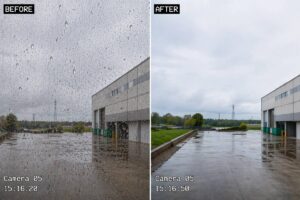
Yes. Wind, dry conditions, and changing site activity can all increase how quickly dust and debris build up on exposed cameras.
Why is reactive cleaning inefficient for remote cameras?
Because the site often waits until the image quality is already poor, then pays the full cost of another access visit. If contamination returns quickly, the cycle repeats.
Is CAMDUSTER relevant for remote perimeter security cameras?
Yes. Perimeter cameras often combine difficult access with critical monitoring needs, which makes preventive cleaning especially valuable.
Can integrators position CAMDUSTER for mining customers with remote sites?
Yes. It is a strong value-added solution for customers dealing with recurring contamination and high access cost per camera.
Do remote cameras need a different maintenance plan?
Usually yes. When travel and access are expensive, maintenance planning should focus on reducing repeat interventions and prioritizing high-cost locations.
Can preventive cleaning improve the ROI of existing mining cameras?
Yes. When cameras stay clearer more consistently, the site gets more useful performance from the surveillance equipment already installed.
What should site managers track to understand remote cleaning cost?
They should track cleaning frequency, travel time, labor time, access equipment needs, safety requirements, and how often the same remote cameras lose useful visibility.
Is CAMDUSTER relevant only in dust-heavy mining zones?
No. It is also valuable anywhere remote access is costly and repeated contamination affects camera usability.
#CAMDUSTER #CameraCleaningRobot #DustRemoval #MiningOperations #FewerSiteVisits