ROI calculator: include travel time, lift rental and PPE
A camera cleaning ROI calculator can be a powerful tool. However, many ROI calculations are too simple to reflect real maintenance cost. They focus only on direct labor, while leaving out the extra expenses that make repeated manual cleaning much more expensive in practice.
That is why a better calculation should include more than technician time. It should also account for travel time, lift rental, and PPE. As a result, the site gets a more realistic picture of what routine camera cleaning actually costs. Therefore, a strong camera cleaning ROI calculator should reflect the full cleaning event, not just the few minutes spent touching the lens.
Why basic ROI calculations often miss the real cost
At first glance, manual camera cleaning may seem inexpensive. A technician goes out, wipes the lens, checks the image, and the task is done. Nevertheless, that view is incomplete.
In many real environments, the actual cleaning action is only one small part of the total job. The larger cost often comes from everything around it.
For example:
- getting to the camera
- preparing to access it safely
- using special equipment
- following site safety requirements
- returning again when contamination comes back
Because of that, a basic cleaning cost estimate often understates the true maintenance burden.
Why travel time matters
Travel time is one of the most commonly ignored cost elements. Yet on large industrial sites, campuses, mines, yards, or multi-building properties, it can be significant.
A technician may need to:
- leave the main work area
- drive or walk to a remote camera point
- wait for access approval
- return after the cleaning is complete
Consequently, the visit may take much longer than expected, even if the actual lens cleaning takes only a few minutes.
This is exactly why a realistic camera cleaning ROI calculator should include travel time as part of every repeat cleaning event.
Why lift rental changes the numbers quickly
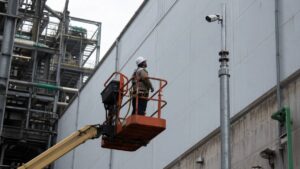
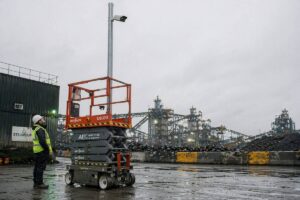
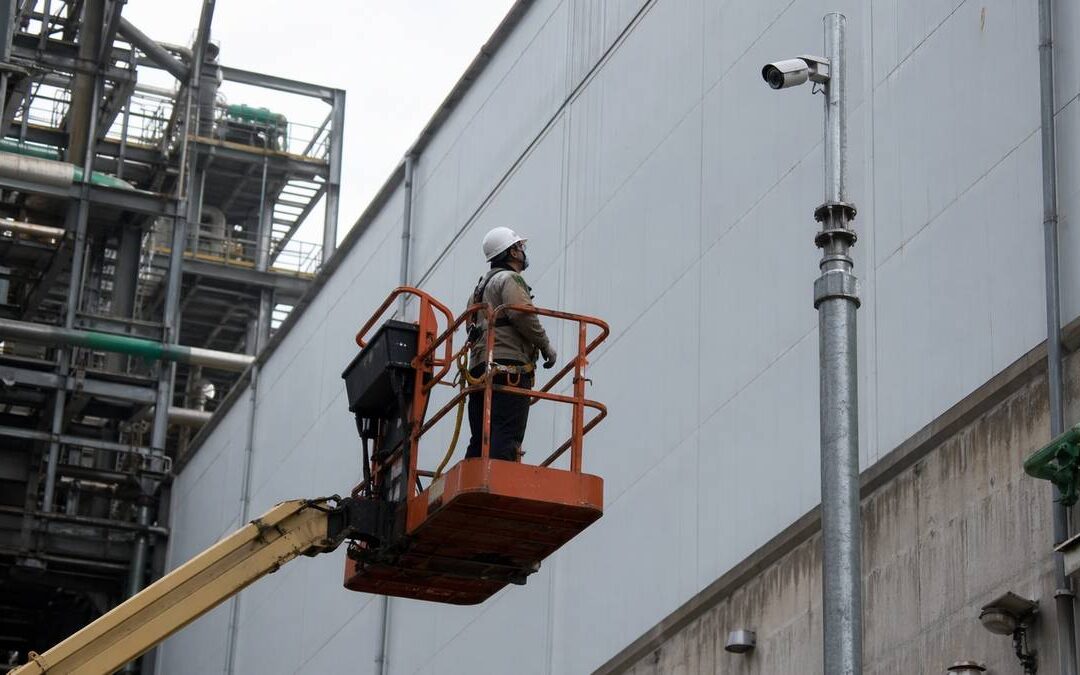
For high-mounted cameras, cleaning often requires access equipment. In some cases, a ladder is enough. In many others, however, a lift or elevated access platform is required.
That creates additional cost such as:
- lift rental fees
- delivery or setup cost
- operator time
- scheduling coordination
- work delays if equipment is unavailable
As a result, one cleaning trip can become much more expensive than a simple labor-only estimate suggests.
This matters especially for:
- pole-mounted cameras
- perimeter cameras
- high warehouse cameras
- yard and gate cameras
- elevated industrial monitoring points
Therefore, lift rental should not be treated as an occasional extra. It should be included wherever the site repeatedly depends on that kind of access.
Why PPE also belongs in the calculation
PPE is often overlooked because it feels like a standard operating cost. However, when camera cleaning requires repeated site visits into active industrial or hazardous zones, PPE becomes part of the real maintenance expense.
Depending on the site, this may include:
- helmets
- high-visibility clothing
- gloves
- eye protection
- respiratory protection
- specialized safety gear
Although PPE may not look dramatic in one visit, the cost becomes meaningful when repeated across many cleaning events and many cameras.
So if the site wants a realistic ROI model, PPE should be included just like labor and access equipment.
The real formula is bigger than labor alone
A more realistic cleaning cost model usually looks more like this:
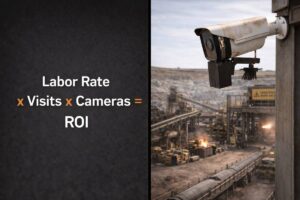
labor + travel time + access equipment + PPE + repeat visits = real cleaning burden
That is why the ROI picture often changes once these items are added. What first looked like a low-cost maintenance task may actually be a repeated operating expense with much larger impact.
In other words, the question is not only:
“How much does it cost to wipe one lens?”
It is:
“How much does it cost to repeat the full visit over and over?”
Why repeat frequency makes hidden costs visible
Even if travel, lift rental, and PPE seem manageable on one visit, repetition changes everything.
If a camera needs cleaning:
- weekly
- twice a month
- after every dust event
- whenever image quality drops noticeably
then each hidden cost keeps multiplying.
As a result, a site may end up spending far more than expected on routine manual cleaning while still operating with reduced visibility between visits.
That is where the ROI conversation becomes more strategic.
How CAMDUSTER improves the ROI calculation
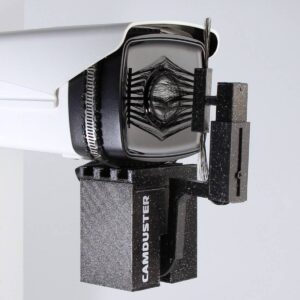
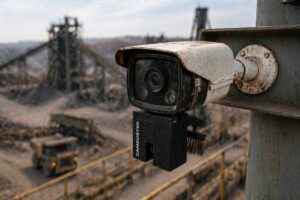
CAMDUSTER is a camera cleaning robot designed to help supported cameras stay clearer with less repeated manual intervention. Instead of relying only on technicians to travel, access, clean, and return again each time contamination builds up, sites can move toward a more preventive maintenance model.
This matters because the real value is not just one avoided cleaning trip. The value comes from reducing the repeated pattern of:
- technician travel
- lift use
- PPE-dependent site visits
- manual labor tied to predictable contamination
CAMDUSTER can help support:
- fewer repeat cleaning visits
- lower maintenance labor burden
- reduced access equipment dependence
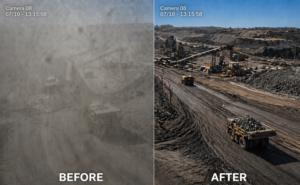
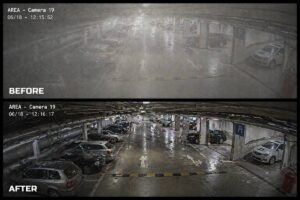
- more consistent image visibility
- better long-term camera ROI
Therefore, a camera cleaning ROI calculator becomes much more convincing when it includes the full cost that CAMDUSTER helps reduce.
Where this calculation matters most
This type of ROI analysis is especially important in places where access is difficult or safety procedures are significant.
Large industrial facilities
Travel time across the site can add major labor cost.
High-mounted or pole-mounted cameras
Lift rental or special access tools may be needed repeatedly.
Dust-heavy or contamination-prone locations
Frequent cleaning makes the total burden grow quickly.
Remote or outdoor camera points
Even minor cleaning events become larger service tasks.
Case Study: the labor cost looked small until access was added
At one industrial site, manual camera cleaning was initially treated as a simple low-cost task. The site calculated technician labor, and the numbers did not seem especially high.
However, once the team added travel time, lift access, and PPE-related site requirements, the real picture changed. Several cameras were mounted in positions that required elevated access, and each visit involved more setup and coordination than expected. In addition, repeated contamination meant the same effort was being repeated again and again.
After reviewing the full cost pattern, the site realized the problem was not cleaning itself. The problem was everything attached to each visit. By shifting toward a more preventive cleaning approach, the team reduced repeat service burden and improved the ROI of its camera maintenance process.
#CAMDUSTER #CameraCleaningRobot #DirtyCameraLens #IndustrialSites #AutomationROI
FAQ
Why is labor alone not enough for a camera cleaning ROI calculation?
Because the real cost usually includes travel time, access equipment, PPE, and repeated visits, not just the minutes spent cleaning the lens.
Should travel time really be counted in ROI?
Yes. On large sites or remote camera locations, travel can add significant labor time to every cleaning event.
When should lift rental be included?
Lift rental should be included whenever cameras are mounted high enough that ladders are not practical or safe for repeated cleaning access.
Why does PPE matter in the cost calculation?
PPE is part of the real cost of accessing and cleaning cameras in active or hazardous areas, especially when those visits are repeated regularly.
How does CAMDUSTER improve ROI?
CAMDUSTER helps reduce repeated manual cleaning visits, which can lower travel, labor, PPE, and access-related maintenance burden over time.
What is the biggest hidden cost in manual camera cleaning?
Usually it is not the wipe-down itself, but the repeated full-service event around it, including travel, preparation, access, and return visits.
Does this matter only for industrial sites?
No. Any site with difficult access, recurring contamination, or repeated manual cleaning can benefit from a more realistic ROI calculation.
Read more FAQs
Can one high-mounted camera justify a full ROI review?
Yes. If access is expensive or contamination is frequent, even one camera can create meaningful repeated maintenance cost.
Why do many sites underestimate cleaning cost?
Because they focus on direct labor and do not count the surrounding access and safety burden that comes with each visit.
Should repeat visit frequency be part of the calculator?
Yes. Frequency is essential because it multiplies every labor, travel, access, and PPE-related cost over time.
What types of cameras usually create the strongest ROI case?
High-mounted, pole-mounted, remote, and contamination-prone cameras usually create the strongest case because they require more effort to maintain.
Can a realistic ROI calculator help justify preventive cleaning investment?
Yes. It helps decision-makers compare repeated manual cost against a more consistent and lower-intervention maintenance approach.
Is lift rental always an external cost?
Not always, but even internal lift use still carries operating, scheduling, and labor costs that should be considered.
Can CAMDUSTER reduce operational disruption too?
Yes. By reducing repeat manual visits, it can also reduce the disruption tied to access setup and maintenance activity.
What is the best way to start an ROI review?
Start by listing all repeat cleaning events, then add labor, travel time, access equipment, PPE, and frequency to each one.
What makes the ROI picture stronger over time?
The longer the pattern continues, the more repeated manual costs accumulate, which makes preventive solutions easier to justify.