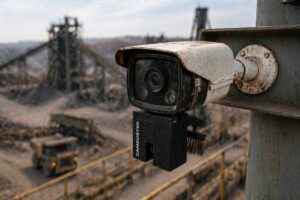

Why IR Attracts Insects and Turns Cameras Into Spider-Web Factories
IR attracts insects more often than many camera operators realize. At first, a security camera may look like a simple monitoring device. However, after dark, that same camera can become the center of a small ecosystem: insects gather near the light source, spiders follow the food, and webs form directly where clear footage is needed most.
That is why this problem is more serious than it appears. It is not just about one spider web. It is about a repeat contamination cycle that affects visibility, increases false alerts, and creates ongoing maintenance work. Therefore, if your site keeps battling webs on the same cameras, it is worth understanding why IR attracts insects and how that turns outdoor cameras into spider-web factories.
Why insects gather around IR-equipped cameras
Many security cameras rely on infrared illumination to improve nighttime visibility. Although that helps the camera see in low light, it also changes the environment around the camera after dark.
Insects are naturally drawn to light sources and to the activity around them. As a result, the camera area becomes a gathering point, especially in warm weather, humid conditions, or locations with strong nighttime insect activity. Consequently, the camera is no longer just recording the environment. It is also attracting movement to itself.
Common high-risk conditions include:
- IR-equipped outdoor cameras
- warm nights with heavy insect activity
- cameras near gates, lights, or perimeter lines
- cameras close to vegetation or water
- industrial sites with strong nighttime lighting
- remote areas where insect buildup goes unnoticed longer
So while the camera may be operating normally, the surrounding conditions are already creating the first stage of a recurring contamination problem.
Why spiders follow so quickly
Once insects gather, spiders do not need much time to respond. From their perspective, a camera surrounded by insect activity is a perfect feeding location.
In addition, bullet cameras, brackets, housings, and mounting arms provide ideal anchor points for web-building. Therefore, the spider does not have to search far for both food and structure. The result is predictable: if IR attracts insects, spiders soon turn that camera into a reliable hunting zone.
That is why the same cameras often get webs again and again. The web is removed, but the food source remains. As a result, the spider or another one often returns to the same spot.
Why this becomes a “spider-web factory”
The phrase may sound dramatic, but on many sites it is accurate. Some cameras produce webs repeatedly because all the conditions are in place every night:
- insects gather around the camera
- spiders build in the same area
- webs form near the lens
- the image degrades
- someone cleans the camera
- the cycle starts again
Consequently, the camera becomes a repeat-production point for contamination rather than an isolated cleaning issue.
This is especially common on:
Perimeter cameras
These cameras often depend heavily on nighttime performance and are exposed to insects, weather, and spider activity.
Gate and entry cameras
They are frequently mounted near lights and need clear detail, yet they often attract the exact conditions that create web buildup.
Industrial sites
Dust, lighting, and difficult access make web-prone cameras more expensive to maintain.
Remote cameras
If cleaning is delayed, the camera can remain in poor condition much longer before anyone intervenes.
Why webs cause so many night-visibility problems
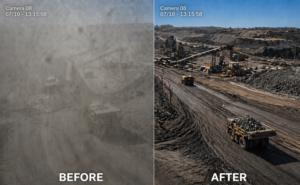
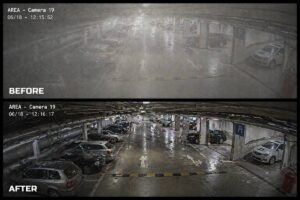
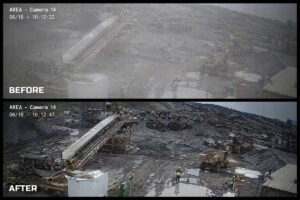
A web near the lens is not just messy. It directly affects footage quality. When IR light reflects off strands close to the viewing path, the image can become hazy, overexposed, soft, or partially blocked. In addition, insects and moving web strands can trigger nuisance motion alerts.
This can lead to:
- blurry night footage
- glare and washed-out image areas
- false alerts
- reduced identification detail
- more repeat cleaning visits
- lower confidence in camera coverage
So the real cost is not just the web itself. It is the ongoing impact on surveillance performance and maintenance effort.
Why manual cleaning does not solve the real cause
Of course, someone can remove the web. However, that only removes the result of the problem, not the conditions creating it.
If IR attracts insects again the next night, spiders will still have a reason to return. Therefore, manual cleaning usually becomes a short-term reset rather than a lasting solution. In easy-access areas that is frustrating. In high-mounted, remote, or industrial locations, it becomes expensive very quickly.
That is why reactive cleaning often keeps sites trapped in the same repeat cycle.
How CAMDUSTER helps reduce the cycle
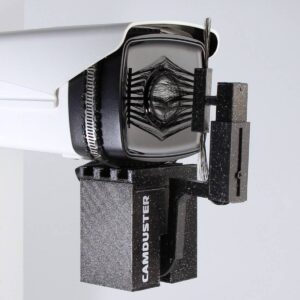
CAMDUSTER is a camera cleaning robot designed to help supported cameras stay clearer through a more preventive cleaning approach. Instead of relying only on manual intervention after webs and contamination already affect the image, operators can reduce the buildup that drives repeated service calls.
That matters because the value of CAMDUSTER is not just one cleaning event. The real value is reducing the recurring pattern behind spider-web buildup.
CAMDUSTER can help support:
- fewer repeat manual cleaning visits
- more consistent visibility after dark
- lower labor tied to web-related contamination
- better maintenance planning
- improved performance from existing cameras
Therefore, if IR attracts insects at your site and spiders keep following, CAMDUSTER helps make that recurring problem more manageable.
Case study: the gate camera that kept growing new webs
At one industrial gate, a bullet camera repeatedly lost nighttime image clarity even though it was cleaned regularly. During the day, the lens area looked acceptable. However, by night, insects gathered around the IR-equipped camera, and fresh web strands repeatedly appeared near the viewing path.
As a result, the site dealt with hazy footage, repeated nuisance alerts, and constant cleaning effort. At first, each web was treated as a separate maintenance issue. Over time, though, the team recognized the real problem: the camera had become a repeat spider-feeding zone because the same nighttime conditions kept returning.
Once the site shifted toward a more preventive cleaning strategy, repeated interventions dropped and the camera delivered more consistent nighttime visibility.
That is the real lesson here. The problem is not just that spiders like cameras. The problem is that the environment around certain cameras keeps recreating the same contamination cycle.
A smarter approach to web-prone cameras
If certain cameras keep attracting insects and spiders, it helps to review them as a pattern, not as isolated cleaning incidents.
A stronger approach usually includes:
- identifying cameras with repeated nighttime web issues
- checking image quality after dark, not only by day
- tracking how often the same cameras need cleaning
- prioritizing high-risk and hard-to-access locations
- shifting from reactive cleaning to preventive maintenance
In other words, the goal is not only to remove the next web. The goal is to reduce how often the same camera becomes a web factory in the first place.
Internal resources to explore
To learn more about recurring contamination and smarter maintenance, see:
- CAMDUSTER camera cleaning solutions
- Cobwebs at night: why they keep coming back
- The “night vision clarity” problem (and the fix)
Conclusion
When IR attracts insects, spiders often follow, and the camera can quickly become a repeat source of web buildup. That is why some security cameras seem to produce webs endlessly even after repeated cleaning.
The better solution is not just cleaning faster each time. The better solution is reducing the recurring contamination cycle that keeps affecting visibility and maintenance cost. CAMDUSTER helps sites do exactly that by supporting a more preventive approach to camera cleanliness and nighttime performance.
FAQ
Frequently Asked Questions
Why do insects gather around IR security cameras?
IR-equipped cameras can create nighttime conditions that attract insect activity around the camera area, especially outdoors and in warm or humid environments.
Why do spiders keep building webs on the same cameras?
Because once insects gather there regularly, spiders see the camera as a reliable feeding spot. The housing and bracket also give them easy anchor points for web-building.
Does IR itself damage the image, or is the web the real problem?
The main issue is contamination near the lens. Webs, dust, and residue reflect IR light back into the camera, which can create haze, glare, and poor nighttime visibility.
Why is the same camera often clean by day and bad by night?
Because the insect and spider activity usually increases after dark. A camera may look acceptable in daylight but perform much worse once webs and IR reflection affect the image at night.
Is this mainly a problem for outdoor cameras?
Yes, outdoor cameras are usually more exposed to insects and spiders. However, cameras in industrial or semi-open indoor environments can also face similar issues.
Why does manual cleaning not fix the problem for long?
Because it removes the web but not the conditions that attract insects and spiders. If those conditions remain, the contamination often returns quickly.
How does CAMDUSTER help with spider-web buildup?
CAMDUSTER supports a more preventive cleaning approach for supported cameras, helping reduce repeated manual cleaning visits and maintain clearer visibility over time.
Read more FAQs
Which camera locations usually suffer most from recurring webs?
Perimeter cameras, gates, entry points, industrial yards, and remote outdoor cameras are among the most common problem locations.
Can spider webs trigger false motion alerts?
Yes. Moving web strands and insects near the lens can create nuisance motion events, especially at night.
Does this problem affect night vision more than daytime footage?
Often yes. Webs and residue reflect IR light more visibly after dark, which makes the effect on the image much worse at night.
Can one web-prone camera really create a major maintenance burden?
Yes. If the same camera repeatedly needs cleaning and access is difficult, one location can consume significant labor and service time over a year.
What should site managers track to understand the true cost?
They should track repeat cleaning frequency, nighttime image complaints, false alerts, access difficulty, and how often the same cameras suffer web-related contamination.
Is CAMDUSTER useful only for sites with many cameras?
No. It can also be valuable for single high-burden cameras where repeat contamination creates ongoing labor and visibility problems.
Can preventive cleaning improve night footage reliability?
Yes. When recurring buildup is reduced more consistently, cameras are less likely to suffer haze, glare, and blur during nighttime operation.
Is this mainly a seasonal problem?
It often becomes worse in warmer seasons, but some sites experience recurring insect and spider activity throughout much of the year depending on local conditions.
What is the biggest hidden cost of these spider-web factories?
The biggest hidden cost is repetition: the same camera keeps demanding labor, cleaning attention, and troubleshooting while still delivering unreliable night footage between visits.
#CAMDUSTER #SecurityCameraCleaning #SpiderWebRemoval #IndustrialSites #PreventiveMaintenance