Storm season: dirt and debris on outdoor cameras
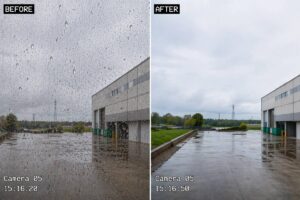
Outdoor camera cleaning storm season problems often build faster than many sites expect. Rain, wind, airborne dirt, and storm-driven debris can all reduce image quality, even when the camera itself remains online and fully operational.
That is why storm season should not be treated as a minor visibility issue. Instead, it should be viewed as a recurring maintenance condition that affects how well outdoor surveillance cameras actually perform. Therefore, outdoor camera cleaning storm season planning becomes especially important when sites depend on clear footage for security, safety, monitoring, and incident review.
Why storm season is hard on outdoor cameras
Outdoor cameras are already exposed to weather. However, storm season adds more than normal rain or light environmental exposure.
For example, storms can bring:
- wind-blown dust
- splashed mud or road grime
- leaves and fine debris
- moisture mixed with dirt
- repeated contamination after each weather event
As a result, the lens area can become dirty quickly and unpredictably.
In some cases, the problem is not only one severe storm. Instead, it is the repeated cycle of contamination that follows changing weather conditions.
What kinds of contamination storms leave behind
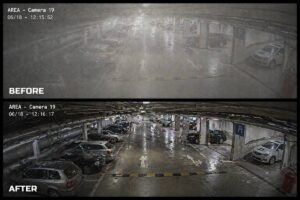
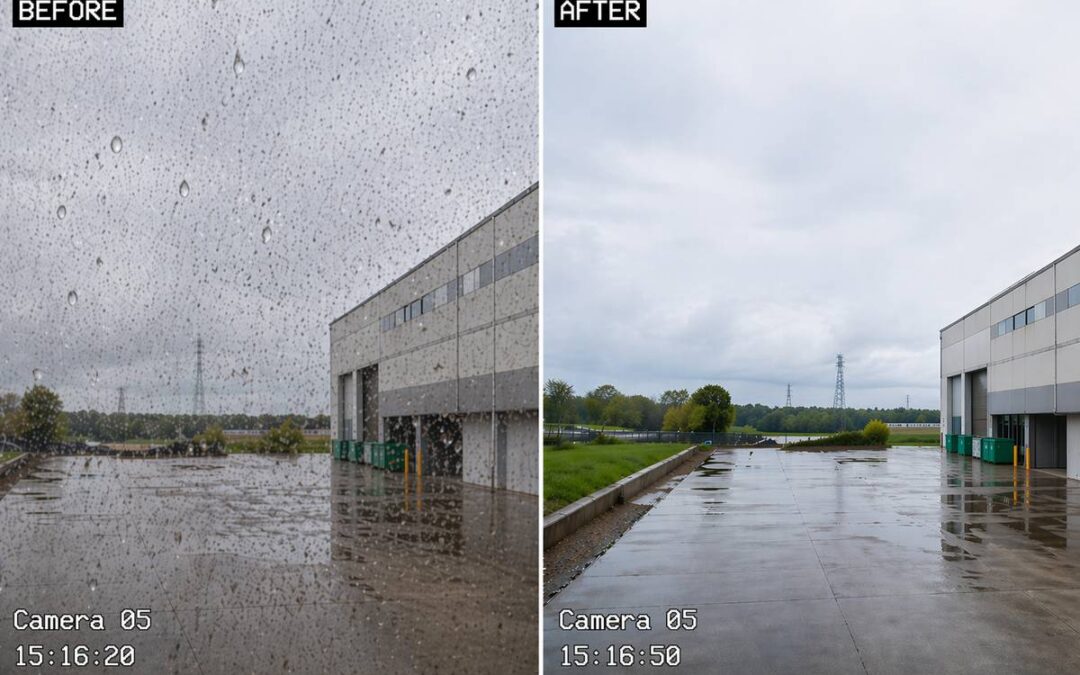
After a storm passes, cameras may still be online, powered, and recording. Nevertheless, the footage may no longer be as useful as operators assume.
Common storm-related issues include:
- dried dirt spots on the lens area
- grime from wind-driven rain
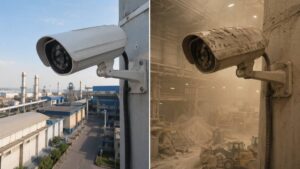
- fine debris stuck around the optics
- hazy visibility after splash or residue buildup
- partial obstruction from outdoor contamination
Because of this, outdoor camera cleaning storm season planning should focus on what happens after the weather event, not only during it.
Which outdoor camera locations are most exposed
Some cameras are much more vulnerable during storm season than others.
Higher-risk locations often include:
- perimeter fence lines
- gate entry and exit points
- yard cameras near vehicle routes
- cameras facing open ground or exposed roads
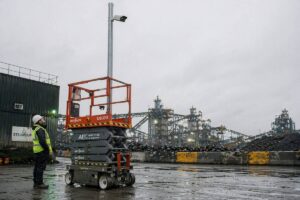
- elevated pole-mounted cameras
- outdoor industrial cameras near material handling areas
These positions are more exposed to wind, splash, and airborne debris. Consequently, the same cameras may need attention again and again during storm-heavy periods.
Why reactive cleaning often falls behind
Many sites wait until image quality becomes obviously poor before responding. Although that may seem practical, storm season often creates contamination faster than teams can react to it.
For example:
- one storm dirties the lens
- the image remains degraded until someone notices
- maintenance is scheduled
- another weather event follows before the issue is fully stabilized
As a result, camera visibility may remain inconsistent for long periods. Therefore, a reactive-only strategy often struggles during storm season.
Why preventive cleaning matters more in storm periods
A stronger approach is to recognize that storm-related contamination is not random enough to ignore. During certain months or weather patterns, the site can reasonably expect more dirt and debris exposure.
That means a preventive strategy may include:
- identifying the most exposed outdoor cameras
- reviewing storm-related visibility loss patterns
- increasing cleaning attention during active weather periods
- prioritizing cameras that support entry, perimeter, or safety monitoring
In other words, the goal is not simply to clean after each problem appears. The goal is to keep critical cameras usable despite repeated outdoor contamination.
How CAMDUSTER helps during storm season
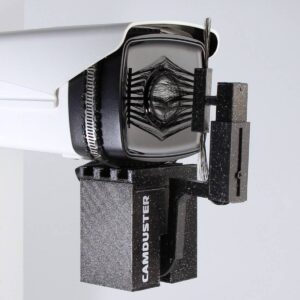
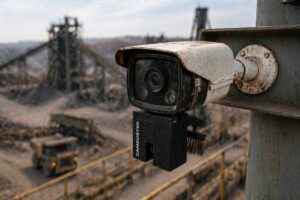
CAMDUSTER is a camera cleaning robot designed to help supported cameras stay clearer with less repeated manual intervention. This matters especially during storm season, when outdoor contamination can return again and again.
Instead of relying only on technicians to respond after visibility has already declined, sites can move toward a more preventive approach.
CAMDUSTER can help support:
- more consistent outdoor camera visibility
- fewer repeat manual cleaning visits
- improved response to recurring contamination
- better use of existing surveillance assets
- lower maintenance burden on exposed cameras
Therefore, outdoor camera cleaning storm season management becomes more practical when the site reduces how often it needs to react manually.
Where this use case is strongest
Storm-related outdoor contamination creates the most maintenance burden in specific scenarios.
Perimeter security cameras
These cameras are exposed continuously and often protect large open areas.
Gate and entrance cameras
They are critical for visibility, yet they face splash, grime, and weather-related dirt.
Pole-mounted yard cameras
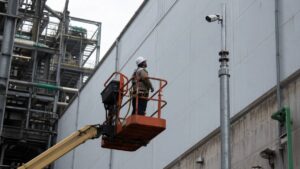
They are difficult to access quickly, especially after repeated weather events.
Industrial outdoor monitoring points
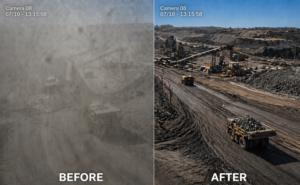
These cameras often face both environmental debris and process-related contamination.
Case Study: repeated storm residue reduced gate visibility
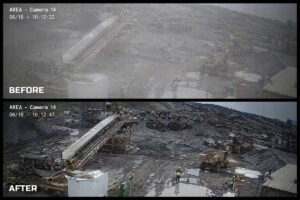
At one outdoor industrial site, gate cameras repeatedly lost useful visibility during storm periods. The cameras remained functional, but wind-driven dirt and rain residue built up on the lens area after each weather event.
Initially, the site relied on manual cleaning when the footage became noticeably poor. However, the same cameras continued to require repeated attention because contamination returned after new storms and changing ground conditions.
After reviewing the pattern, the site identified that the main issue was not a one-time cleaning failure. Instead, it was the recurring nature of outdoor contamination during storm season. By moving toward a more preventive maintenance approach, the team improved visibility consistency at key outdoor monitoring points and reduced repeated manual cleaning burden.
That is exactly where CAMDUSTER creates value: helping support clearer outdoor cameras when weather-driven contamination keeps coming back.
FAQ
Why do outdoor cameras get dirty so quickly during storm season?
Storms combine wind, moisture, dirt, and debris, which can leave residue on the lens area much faster than normal daily exposure.
Can a camera still be recording even if storm residue affects visibility?
Yes. The camera may stay fully online while the footage becomes less useful because dirt or debris reduces image clarity.
Which outdoor camera positions are most affected?
Perimeter cameras, gate cameras, pole-mounted yard cameras, and exposed industrial monitoring points are often the most vulnerable.
Is rain the only problem during storm season?
No. Wind-blown dirt, splash, fine debris, and residue left behind after storms are often the bigger long-term visibility problem.
Why is reactive cleaning often not enough?
Because by the time someone notices poor visibility, the footage may already have been degraded for hours or days, and another storm event may follow soon after.
How does CAMDUSTER help in storm season?
CAMDUSTER helps supported cameras stay clearer with less repeated manual intervention, which is especially useful when outdoor contamination keeps returning.
Should all outdoor cameras be treated the same way?
No. Cameras in exposed, windy, or splash-prone locations usually need more attention than those in more protected areas.
Read more FAQs
What kind of debris causes the most problems?
Fine dirt, dried rain residue, splash grime, and small airborne debris are common causes of visibility loss during storm season.
Do storm problems continue after the weather clears?
Yes. Many visibility issues come from residue and debris left behind after the storm, not only during the storm itself.
Are gate cameras especially vulnerable?
Yes. They often face outdoor exposure, ground splash, vehicle movement, and weather-driven dirt at the same time.
Can storm season increase manual cleaning frequency?
Yes. Sites often see more repeated cleaning needs during active weather periods because contamination returns more often.
Why are pole-mounted cameras harder to manage in bad weather periods?
They are more exposed to the elements and usually require more effort and access planning for manual cleaning.
Is preventive planning worthwhile for seasonal weather patterns?
Yes. If storm-related contamination happens repeatedly, it makes sense to plan for it instead of treating every event as a surprise.
What is the biggest visibility risk after a storm?
The biggest risk is assuming the camera is still fully useful just because it remains powered and recording, even though the image may already be degraded.
Can CAMDUSTER help reduce repeated outdoor maintenance trips?
Yes. It helps support a more preventive approach so teams do not need to rely only on repeated manual response.
What is the main goal during storm season?
The goal is to maintain usable outdoor camera visibility despite repeated dirt and debris exposure from changing weather conditions.
#CAMDUSTER #SecurityCameraCleaning #DebrisRemoval #IndustrialSites #PreventiveMaintenance