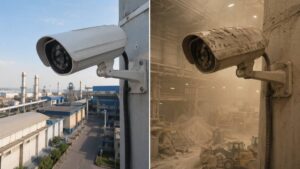
Camera cleaning frequency: once a day or 3 times a day?
Camera cleaning frequency is one of the most practical questions sites face after recognizing that recurring contamination is affecting visibility. Some cameras stay clear with only light routine cleaning. Others lose useful image quality so quickly that one cleaning per day is simply not enough.
That is why the correct answer is not always “clean more” or “clean less.” Instead, the right cleaning frequency depends on how fast contamination returns, how critical the footage is, and how expensive manual intervention becomes. Therefore, camera cleaning frequency should be matched to the real exposure pattern of each camera location.
Why frequency matters
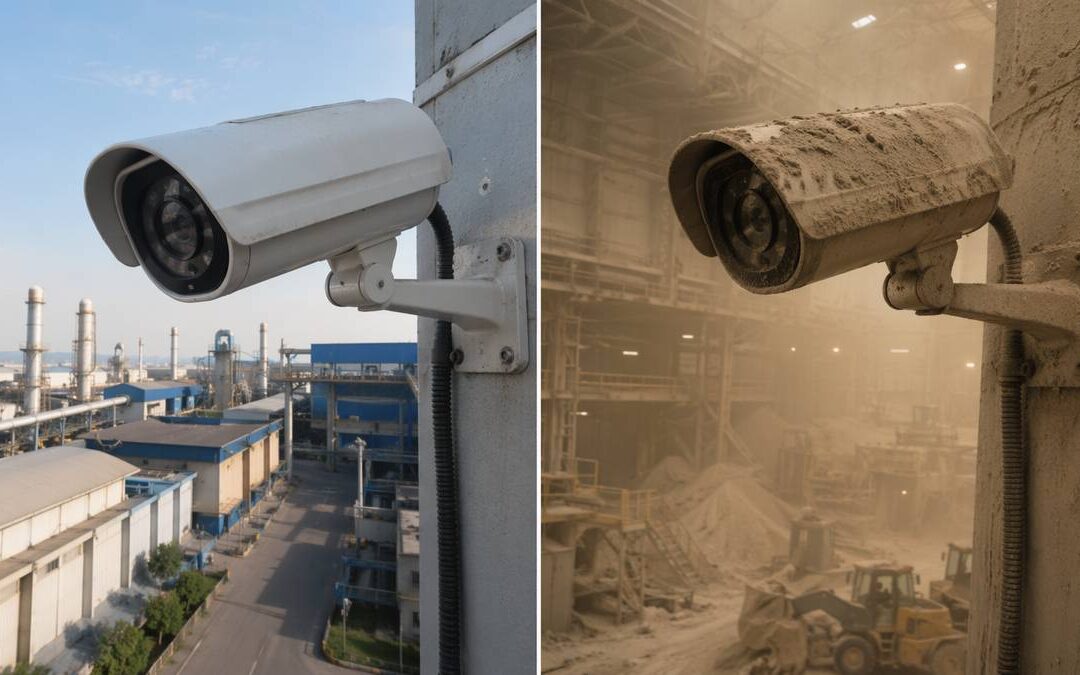
A camera can be technically online and still be functionally underperforming. If the lens becomes dusty, web-covered, or hazy between cleaning cycles, the footage may lose practical value long before anyone schedules maintenance.
As a result, the wrong cleaning interval can create two different problems:
- cleaning too rarely, which allows visibility to degrade
- cleaning too often without need, which adds unnecessary effort or system use
So the goal is not maximum cleaning. The goal is the right frequency for the environment.
When once a day may be enough
For some camera locations, camera cleaning frequency of once per day can be sufficient. This is often true where contamination builds gradually rather than aggressively.
Typical examples include:
- light industrial areas
- lower-traffic yards
- protected outdoor positions
- indoor zones with moderate dust
- cameras with lower daily exposure
In these cases, one daily cleaning can help prevent buildup from accumulating while avoiding overuse of the cleaning cycle.
Therefore, once-daily cleaning often works best where contamination is predictable but not extreme.
When 3 times a day makes more sense
Other environments are much harsher. In these cases, contamination can return fast enough that a single daily cleaning leaves too much time for the image to degrade.
This is more likely in:
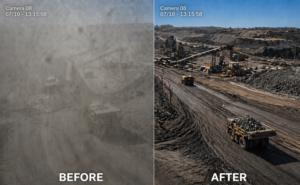
- haul road camera positions
- dusty loading zones
- warehouse traffic lanes
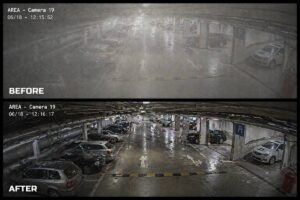
- parking garage entry and exit areas
- cement, mining, or steel process zones
- cameras exposed to recurring insect and cobweb activity at night
Under those conditions, camera cleaning frequency of 3 times a day may be the better choice because it helps maintain visibility across the full operating day rather than only after one cleaning event.
In other words, higher-frequency cleaning is usually justified when the environment repeatedly outpaces the camera’s ability to stay clear.
How to decide between once and 3 times daily
A good decision usually starts with three questions:
1. How fast does contamination return?
If the image becomes noticeably worse only after long periods, once a day may be enough. However, if visibility drops within hours, a higher frequency is more appropriate.
2. How critical is the camera?
A camera used for perimeter awareness may tolerate mild visibility decline better than one used for LPR, face capture, traffic monitoring, or incident review.
3. What is the cost of staying dirty too long?
If every period of reduced clarity creates risk, operational inefficiency, or repeat manual cleaning burden, a higher cleaning frequency can make strong business sense.
That is why camera cleaning frequency should be based on operational reality, not just preference.
Signs that once-daily cleaning is too low
If a site is unsure whether one cleaning per day is enough, these warning signs are useful:
- the lens looks clear in the morning but degraded later in the day
- visibility drops before the next scheduled cycle
- the same camera still needs manual attention
- critical detail becomes unreliable between cleanings
- contamination returns quickly after traffic peaks or dust events
If these patterns appear repeatedly, the site may need to increase frequency rather than accept recurring visibility loss.
Signs that 3 times daily may be unnecessary
Not every camera needs aggressive scheduling. In some locations, 3 daily cleanings may be more than required.
This may be true when:
- the environment is relatively stable
- image quality remains strong throughout the day
- contamination builds slowly
- manual inspections show minimal re-buildup
- the camera is in a sheltered or lower-risk position
Therefore, the best setup is often a targeted approach where harsher cameras get more frequent cleaning while quieter cameras stay on a lighter schedule.
How CAMDUSTER helps match frequency to environment
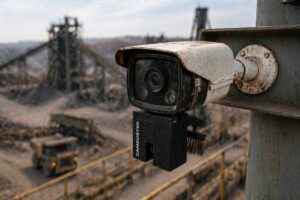
CAMDUSTER is a camera cleaning robot designed to support a more preventive cleaning strategy for supported cameras. Instead of relying only on manual cleaning after the image has already degraded, sites can choose a schedule that matches how the environment behaves.
This matters because the value of CAMDUSTER is not only cleaning once. The real value is maintaining useful visibility consistently across the day.
CAMDUSTER can help support:
- predictable cleaning intervals
- better visibility consistency
- reduced repeat manual cleaning
- flexibility between lighter and harsher schedules
- more efficient use of camera assets
Therefore, camera cleaning frequency becomes a controllable maintenance setting rather than a recurring manual problem.
Where higher frequency usually creates the most value
Some use cases are especially well suited to multiple cleanings per day.
Traffic-heavy industrial routes
Dust and airborne particles can return fast during active operating hours.
Night insect and cobweb zones
Morning cleaning alone may not protect image quality across the next night cycle.
High-value identification cameras
LPR and face-recognition cameras benefit from more stable lens clarity.
Harsh process environments
Cement, mining, and steel zones often create contamination patterns that justify more frequent preventive cleaning.
Case Study: one daily cycle was not enough
At one industrial site, a camera monitoring a busy internal traffic route was placed on a once-daily cleaning schedule. Initially, the approach seemed reasonable because the lens started each day in good condition.
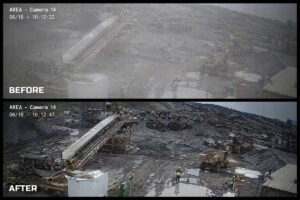
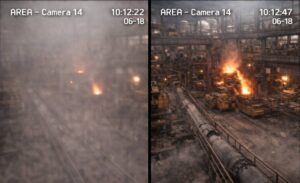
However, by the afternoon, dust from vehicle movement had already reduced image clarity. Although the camera remained online, the footage was noticeably less useful during active operating periods. Manual cleaning was still occasionally needed, which meant the schedule was not solving the real problem.
After the site increased the cleaning frequency to three times a day, visibility remained more consistent across the full shift pattern. As a result, the team reduced repeat manual intervention and improved confidence in the footage from that location.
This showed that the right answer was not simply “daily cleaning.” It was the right daily frequency for that environment.
FAQ – Camera cleaning frequency
How do I know if once-a-day cleaning is enough?
If the camera stays clear throughout the day and visibility does not noticeably decline before the next cycle, once-daily cleaning may be sufficient.
When should I consider 3 cleanings per day?
You should consider it when dust, webs, soot, or debris return quickly enough that image quality drops within the same day.
Do all cameras need the same cleaning frequency?
No. Different locations experience different levels of exposure, so cleaning schedules should match the real contamination pattern of each camera.
Can higher cleaning frequency reduce manual intervention?
Yes. If the schedule matches the environment, it can reduce the need for repeat manual cleaning by preventing buildup before it becomes a larger problem.
How does CAMDUSTER help with cleaning frequency?
CAMDUSTER supports a preventive approach by allowing supported cameras to follow a more consistent cleaning schedule based on the site’s actual conditions.
Is 3 times a day too much?
Not necessarily. In harsh environments, it may be the most practical way to keep critical footage clear throughout the operating day.
What types of locations often need higher frequency cleaning?
Dust-heavy traffic routes, mining zones, cement plants, steel process areas, parking garages, and insect-prone night locations often benefit from more frequent cleaning.
Read more FAQs
Can once-daily cleaning still leave long dirty periods?
Yes. If contamination returns quickly, the camera may spend many hours with reduced visibility before the next scheduled cleaning cycle.
Should critical cameras have different schedules from general monitoring cameras?
Yes. Cameras used for identification, incident review, or safety-critical monitoring often justify a more protective cleaning schedule.
What is the biggest mistake in setting cleaning frequency?
The biggest mistake is applying the same schedule to every camera without considering how quickly each location gets dirty.
Can seasonality change the ideal cleaning frequency?
Yes. Dry seasons, heavy traffic periods, and insect activity can all increase contamination and justify more frequent cleaning.
How can I tell if 3 daily cleanings are unnecessary?
If the image remains consistently clear and contamination builds only slowly, a lower schedule may be enough.
Does higher cleaning frequency mean more wear?
A controlled preventive system is designed for repeat use, and the right schedule should be based on environmental need rather than guesswork.
Can one site use both once-daily and 3-times-daily schedules?
Yes. That is often the smartest approach, with harsher locations receiving more frequent cleaning than lower-risk camera positions.
Why is frequency such an important setting?
Because it directly affects how long a camera stays clear and how much manual maintenance is still needed between cleaning events.
What is the main goal of choosing the right frequency?
The goal is to maintain useful camera visibility consistently while avoiding unnecessary manual work or over-cleaning.
#CAMDUSTER #AutomaticCameraCleaning #DirtyCameraLens #IndustrialSites #OperationalEfficiency