Site Access Costs: Permits, Lift, and Shutdown Time
Camera cleaning access costs are one of the most underestimated factors in surveillance maintenance budgets. On paper, cleaning a camera seems like a minor task. In practice, it often involves a chain of preparations that take more time, more coordination, and more money than expected.
This is especially true for cameras installed at height, inside restricted zones, or near active operations. Therefore, understanding the full cost of access is essential to making smarter maintenance decisions.
Why access is the real hidden cost
Most maintenance budgets account for technician time and materials. However, they rarely account for the full scope of what a single cleaning visit actually requires.
When a camera is mounted in a difficult location, cleaning it typically involves:
- identifying the exact access requirement
- arranging permits or approvals
- sourcing and scheduling lift equipment
- coordinating with operations or safety teams
- planning the visit around active work schedules
- repeating the entire process for the next cleaning
Each of these steps adds cost, even before anyone touches the camera.
What permits actually involve
In many industrial and commercial environments, working at height or near active equipment requires a formal permit. These are not simple sign-offs.
Typical permit requirements include:
- work-at-height authorisation
- risk assessment documentation
- toolbox talk or safety briefing
- supervisor sign-off
- time restrictions during active operations
- reinspection after the work is completed
As a result, obtaining a permit for a camera cleaning visit can take hours or even days of administrative work. Consequently, teams often batch cleaning tasks together just to justify the permit effort, which means individual cameras wait longer between cleanings.
The cost of lift equipment
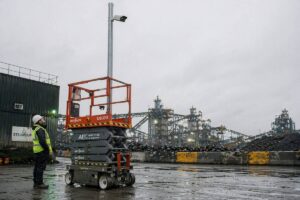
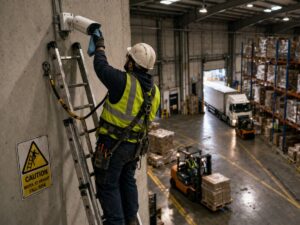
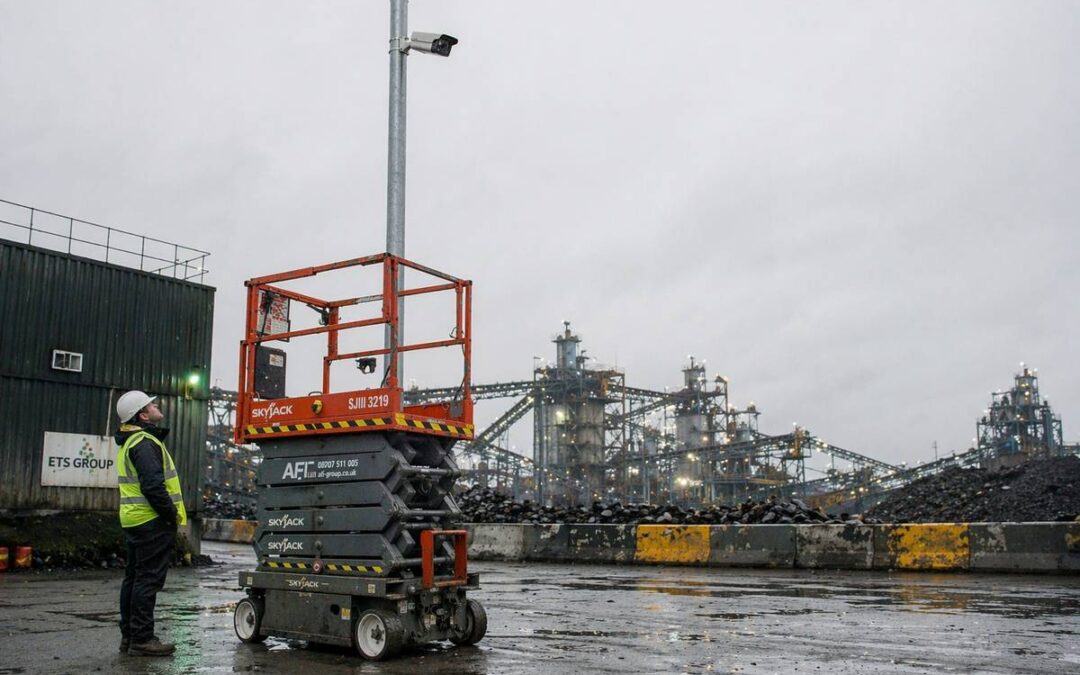
When a camera is mounted above safe ladder height, a cherry picker, scissor lift, or elevated work platform is required. This adds a separate layer of cost and logistics.
Typical lift-related expenses include:
- rental or internal allocation of equipment
- transport to and from the site
- operator qualification requirements
- ground preparation and safety exclusion zones
- time for setup and takedown
Even a short cleaning job can require one to two hours of lift time for a task that takes minutes. Therefore, the cost per camera visit is significantly higher than it appears on the surface.
Shutdown time and operational disruption
Some camera locations cannot be accessed while nearby operations are running. This means cleaning can only happen during scheduled downtime, shift changes, or planned shutdowns.
This creates a direct link between camera maintenance and operational cost:
- cleaning may be tied to production schedules
- access windows are narrow and infrequent
- missed windows push cleaning further back
- visibility gaps widen as a result
In other words, the camera stays dirty not because cleaning is difficult, but because the access window is rare and costly to use.
Why small delays compound into bigger problems
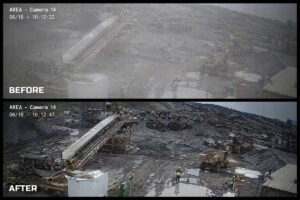
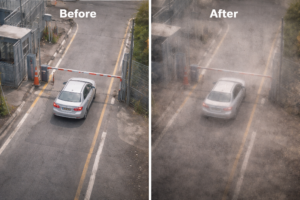
Each time a cleaning visit is postponed, the contamination on the camera continues to build. Dust, debris, and environmental deposits do not pause while the permit is being arranged.
Over time, this creates a compounding effect:
- light contamination becomes moderate
- moderate contamination becomes heavy
- heavy contamination requires more effort to remove
- image quality deteriorates in the meantime
Because access is expensive, teams delay. Because teams delay, the problem worsens. Because the problem worsens, the eventual access visit becomes more complex and more costly.
How CAMDUSTER helps reduce access costs
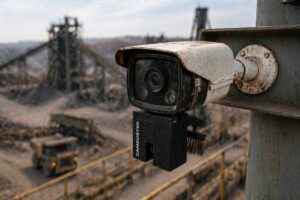
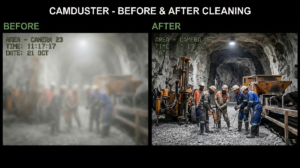
CAMDUSTER is a camera cleaning robot designed to reduce the reliance on repeated manual access. Instead of triggering a full access process every time a camera needs cleaning, CAMDUSTER supports consistent cleaning at the camera level, without requiring lift equipment, permits, or shutdown coordination.
This matters because the real value is not in cleaning once. It is in reducing how often the full access process needs to be activated at all.
CAMDUSTER can help support:
- fewer lift equipment rentals
- reduced permit frequency for routine cleaning
- less operational disruption from maintenance visits
- more consistent image clarity between access windows
- lower total maintenance cost for hard-to-reach cameras
Therefore, camera cleaning access costs can be significantly reduced when routine maintenance no longer depends entirely on manual intervention.
Where access costs are highest
This issue is most significant in environments where cameras are installed in operationally complex locations:
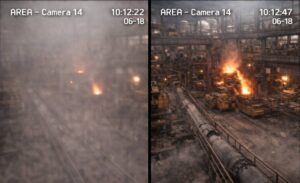
Active industrial facilities Working near machinery or production lines requires permits, exclusion zones, and careful scheduling.
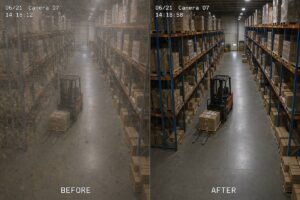
High-bay warehouses and logistics sites Camera height and racking systems make lift access necessary for most cleaning visits.
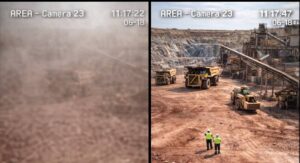
Outdoor infrastructure and perimeter lines Distance, weather dependency, and exposure conditions add to the effort of each visit.
Critical or restricted zones Security-sensitive areas may require additional approvals before any maintenance work begins.
Sites with continuous operations When there is no natural downtime, finding an access window means either waiting or accepting disruption.
Case study: when a permit delayed a single cleaning visit by three weeks
At one industrial facility, a camera mounted above an active loading zone required a work-at-height permit before any maintenance could begin. The permit process involved risk assessment, supervisor approval, and coordination with logistics scheduling.
The camera had been showing reduced image quality for several weeks. Despite being flagged for cleaning, the visit was postponed three times because the access window could not be aligned with permit availability.
When the cleaning finally took place, the improvement in image quality was immediate. However, the site had operated for over three weeks with degraded visibility from a camera in a critical location.
After reviewing the situation, the team identified that the access cost was the main driver of the delay. The cleaning itself had never been the obstacle.
This case illustrates a broader pattern: when access is expensive, maintenance gets deferred, and visibility suffers as a result.
A smarter approach to access-heavy camera maintenance
If your site has cameras in locations that require permits, lift equipment, or shutdown coordination, it is worth reviewing how access costs are affecting your maintenance frequency.
A stronger approach usually includes:
- mapping cameras by access difficulty and cost
- tracking how access requirements affect cleaning frequency
- identifying cameras where preventive solutions could reduce manual visits
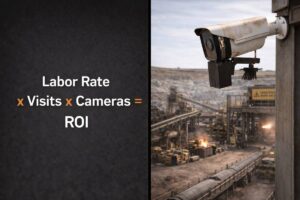
- calculating the true cost per cleaning visit, including all access-related effort
- reducing dependency on manual access for routine maintenance tasks
The goal is not simply to clean cameras when access allows. The goal is to maintain consistent visibility without letting access costs dictate how often cleaning happens.
Internal resources to explore
To learn more about reducing camera maintenance effort across your site, see:
- CAMDUSTER camera cleaning solutions
- Cameras on poles: why manual cleaning gets skipped
- Warehouse use case: constant airborne dust from traffic
Conclusion
Camera cleaning access costs are rarely visible in a single line item, but they are present in every delayed visit, every postponed permit, and every hour of lift equipment waiting to be used.
When access is difficult, cleaning gets deferred. When cleaning gets deferred, visibility declines. And when visibility declines, the value of the entire surveillance investment is reduced.
That is why reducing the reliance on manual access is not just a convenience. It is a maintenance strategy. CAMDUSTER helps sites maintain camera clarity more consistently, with less dependence on the permits, equipment, and shutdown time that make routine cleaning so difficult to sustain.
FAQ
Frequently Asked Questions
What are the main costs involved in accessing a camera for cleaning?
The main costs include permit administration, lift equipment rental, operator time, safety coordination, and any operational disruption caused by the maintenance visit.
Why do permits make camera cleaning more expensive?
Because obtaining a work-at-height or restricted-area permit involves risk assessments, approvals, and scheduling, which adds administrative time and delays the actual cleaning visit.
How much does lift equipment add to a cleaning visit?
Significantly. Even a short cleaning task can require one to two hours of lift setup, operation, and takedown, in addition to transport and rental costs.
What is shutdown time and why does it matter?
Shutdown time refers to pausing nearby operations to allow safe access to the camera. In active facilities, this can mean waiting for a scheduled break or planned downtime, which delays cleaning further.
How does CAMDUSTER reduce access costs?
By maintaining cameras more consistently without requiring repeated manual access, CAMDUSTER reduces how often lift equipment, permits, and shutdown coordination are needed for routine cleaning.
Can access costs actually affect image quality?
Yes. When access is expensive, cleaning gets delayed. Delayed cleaning leads to contamination buildup and reduced image quality over time.
Where are access costs highest?
In industrial facilities, high-bay warehouses, restricted zones, outdoor perimeter lines, and any site where operations run continuously without natural downtime.
Read more FAQs
Is a single cleaning visit really that expensive?
When you include permit time, lift rental, technician hours, and operational coordination, a single visit to a hard-to-reach camera can cost far more than expected.
How does access cost affect maintenance frequency?
Higher access costs lead teams to delay or batch cleaning visits, which means individual cameras go longer between cleanings than they should.
Can batching cleaning visits solve the problem?
It reduces the number of access events, but it also means cameras wait longer between cleanings, which increases contamination levels and visibility gaps.
Does this problem apply to all camera types?
It is most significant for cameras installed at height, in restricted zones, or near active operations where access requires preparation and coordination.
Can preventive cleaning reduce total access cost?
Yes. Maintaining cameras more consistently reduces the severity of contamination and the urgency of manual visits, which lowers the overall access burden over time.
What is the biggest risk of deferring camera cleaning?
Gradual visibility loss that goes unnoticed until footage becomes unreliable, combined with increasingly costly cleaning visits when access is finally arranged.
How can sites track their real camera cleaning costs?
By mapping cameras by access difficulty, logging cleaning frequency, and calculating the full cost per visit including permits, equipment, and time.
Is manual cleaning still necessary with CAMDUSTER?
It may still be needed occasionally, but CAMDUSTER reduces how often it is required, which is where the real cost saving comes from.
Why do access costs often go unrecognised in maintenance budgets?
Because they are spread across multiple departments and categories, permits, equipment, operations, and labour, making the true total difficult to see in a single report.
Hashtags: #CAMDUSTER #CameraCleaningRobot #MaintenanceCosts #IndustrialSites #SurveillanceMaintenance #OperationalEfficiency