
Fewer Ladder Climbs, Fewer Accidents: The Safety Case for Camera Cleaning Automation
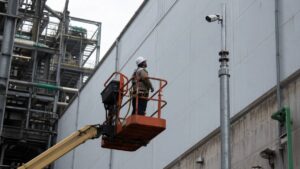
Camera cleaning safety deserves more attention than it usually gets. A dirty camera may look like a simple maintenance issue, and cleaning it may seem like a quick routine task. However, when that task repeatedly requires ladders, lifts, or elevated access, it becomes a safety issue as well as a maintenance one.
That is why the conversation should not stop at image quality. Every time a technician climbs to clean a high-mounted camera, the site takes on avoidable exposure. As a result, even routine cleaning can create unnecessary risk when the same cameras need repeated manual attention. Therefore, camera cleaning safety should be part of the decision about how cameras are maintained in the first place.
Why routine ladder work creates real safety exposure
A single ladder climb may feel normal. In many facilities, it happens so often that teams stop thinking about it as a meaningful risk. Nevertheless, repeated work at height always increases exposure.
That is especially true when cameras are mounted:
- high on walls
- above gates or loading areas
- over warehouse traffic lanes
- on perimeter poles
- in remote industrial locations
- in areas with uneven access conditions
In these cases, the actual cleaning may take only minutes. However, the setup, climbing, reaching, and repositioning all create additional opportunity for error or injury.
Why the risk grows with repetition
This is where many sites underestimate the problem. The safety burden is not one ladder climb. It is the accumulated pattern of repeated climbs over time.
For example, if the same camera needs manual cleaning every week or every month, that means the site is committing to repeated elevated access events year after year. If multiple cameras follow the same pattern, the exposure grows quickly.
That can include:
- fall risk
- dropped tools or equipment
- strain from repeated access work
- disruption below the work area
- extra setup and safety controls
- more time spent in elevated positions
So the real question is not whether a team can climb safely once. The real question is how often the site keeps asking people to do it again.
Why high-mounted cameras create hidden operational risk
Many cameras are mounted high because that gives a strong field of view. From a surveillance perspective, that often makes sense. From a maintenance perspective, however, it creates a repeat access problem.
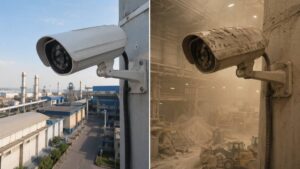
If those cameras are exposed to dust, cobwebs, residue, or debris, the site ends up combining two things that do not work well together:
- recurring contamination
- repeated work at height
As a result, maintenance teams are not only cleaning cameras. They are repeatedly managing access risk just to keep visibility acceptable.
That is why camera cleaning safety becomes especially important in industrial sites, warehouses, remote perimeters, and other locations where contamination returns faster than expected.
Why reactive cleaning often increases the safety burden
Reactive cleaning usually means someone goes up only after the image has become obviously poor. That may sound efficient, but it often creates the wrong pattern.
First, the camera degrades. Then, the site notices the problem. After that, a manual visit is arranged. If contamination returns again soon after, another elevated access event follows. Consequently, reactive maintenance can mean repeated ladder climbs with little long-term improvement.
In other words, the site is not just cleaning reactively. It is exposing staff reactively as well.
Why fewer climbs usually means better safety performance
The safety case is straightforward: if you reduce the number of times someone has to access a high-mounted camera manually, you reduce the number of times that person is exposed to elevated-access risk.
That does not mean all maintenance disappears. Cameras still need inspection and proper care when required. However, reducing repeated routine climbs can still create a meaningful safety advantage.
This matters because fewer climbs can mean:
- fewer opportunities for falls
- fewer chances of dropped items
- less repetitive strain on staff
- less disruption in active work zones
- lower dependence on ladders and lifts for routine cleaning
- a more controlled maintenance process overall
Therefore, camera cleaning safety is not only about how safely a ladder is used. It is also about whether the climb was necessary as often as it keeps happening.
How CAMDUSTER helps reduce ladder-dependent cleaning
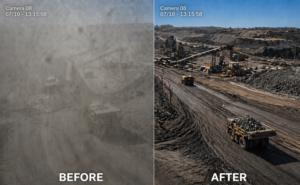
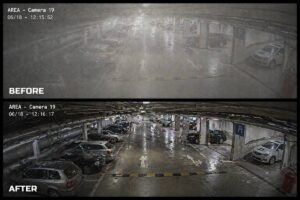
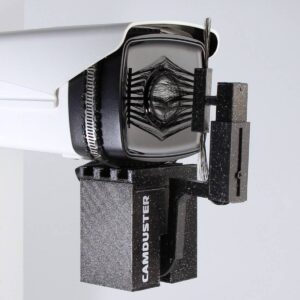
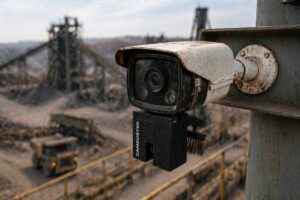
CAMDUSTER is a camera cleaning robot designed to help supported cameras stay clearer through a more preventive cleaning approach. Instead of relying only on repeated manual cleaning visits after contamination affects visibility, sites can reduce the recurring buildup that keeps driving people back to the same elevated positions.
That matters because the value of CAMDUSTER is not only cleaner cameras. It is also reduced dependence on repeated ladder-based routine cleaning.
CAMDUSTER can help support:
- fewer repeat manual climbs
- lower routine access burden
- improved maintenance safety planning
- more consistent camera visibility
- reduced exposure in high-mounted camera locations
Therefore, when a site wants to improve camera cleaning safety, one of the smartest steps is reducing how often routine contamination forces people to climb in the first place.
Where this safety issue matters most
Some camera locations create more safety exposure than others.
Warehouse walls and beams
Cameras mounted above traffic lanes often require area control plus elevated access.
Gate and entry cameras
These may be easy to see but still awkward or risky to reach repeatedly.
Industrial yard cameras
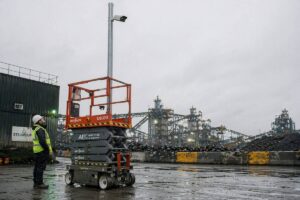
Access may involve ladders, lifts, uneven ground, or active operational zones.
Pole-mounted perimeter cameras
These often combine difficult access with recurring dust or web contamination.
Case study: a camera that kept sending staff back up the ladder
At one warehouse site, a high-mounted camera above an internal vehicle lane kept losing visibility because of dust buildup. Initially, the maintenance team treated each cleaning as a quick and manageable task. Nevertheless, every visit required ladder access, area awareness, and time working above an active zone.
Over time, the pattern became more concerning. The issue was not one climb. It was the repeated need to send someone back up for the same predictable contamination problem. As a result, the site was accepting routine elevated-access exposure as part of normal camera maintenance.
Once the team reviewed the situation more strategically, the real issue became clear: this was as much a safety-management problem as a cleaning problem. By moving toward a more preventive cleaning approach, the site reduced repeat manual climbs and improved control over both visibility and maintenance risk.
That is where CAMDUSTER creates value. It helps reduce the repeated access burden behind the camera cleaning task.
A smarter way to think about camera-cleaning safety
If your site has high-mounted cameras that need repeat attention, it helps to ask:
- How often are staff climbing to clean the same cameras?
- Which locations create the most elevated-access exposure?
- Are those climbs routine because contamination keeps returning?
- How much of that ladder work could be reduced with a more preventive approach?
- Is the current method truly low-risk, or just familiar?
Those questions shift the conversation from “Can we clean it?” to “How often are we exposing people to avoidable routine access work?”
Internal resources to explore
To learn more about smarter, safer camera maintenance, see:
- CAMDUSTER camera cleaning solutions
- The hidden cost of “free” manual camera cleaning
- One device vs. monthly ladder visits: the real ROI story in camera cleaning
Conclusion
Camera cleaning safety should not be treated as a minor side issue. When cameras are mounted high and contamination returns often, routine cleaning turns into repeated ladder work, and repeated ladder work means repeated risk.
That is why fewer climbs usually mean fewer accidents. CAMDUSTER helps sites reduce routine elevated-access cleaning, support clearer camera visibility, and create a more preventive maintenance strategy with lower exposure for the people doing the work.
#CAMDUSTER #AutomaticCameraCleaning #CameraVisibility #IndustrialSites #LowerLaborCosts
FAQ
Frequently Asked Questions
Why is camera cleaning considered a safety issue?
Because many cameras are mounted high enough that cleaning requires ladders, lifts, or other elevated access. Every repeated climb increases exposure to work-at-height risk.
Is one quick ladder climb really a big concern?
One climb may seem minor, but the real issue is repetition. If the same cameras need routine cleaning again and again, the safety exposure accumulates quickly over time.
Which camera locations usually create the most access risk?
High wall-mounted cameras, beam-mounted warehouse cameras, pole-mounted perimeter cameras, gate cameras, and industrial yard cameras often create the highest elevated-access burden.
Why does reactive cleaning make the safety problem worse?
Because it creates repeated unplanned climbs whenever image quality drops. If contamination returns often, staff may keep going back to the same elevated location without reducing the underlying recurrence.
How does CAMDUSTER help improve camera cleaning safety?
CAMDUSTER supports a more preventive cleaning approach for supported cameras, helping reduce repeated manual cleaning visits and lowering dependence on routine ladder-based access.
Does CAMDUSTER eliminate all elevated maintenance work?
No. Cameras still need inspection and general maintenance when required. However, it can help reduce the routine cleaning climbs caused by recurring contamination.
Why are fewer ladder climbs important even if the team is trained?
Training matters, but reducing exposure matters too. A well-trained team is still safer when it does not need to perform the same elevated routine task as often.
Read more FAQs
Can high-mounted cameras create hidden labor and safety costs at the same time?
Yes. Repeated access work often adds both labor cost and safety exposure, especially when contamination returns regularly.
Is this mainly a warehouse issue?
No. Warehouses are one example, but the same problem applies to industrial yards, remote sites, gate entries, perimeter poles, and many other elevated camera locations.
What should site managers track to understand the real safety burden?
They should track how often staff climb to clean cameras, which locations require elevated access, and how often the same cameras need repeat attention.
Can fewer manual climbs also reduce disruption below the work area?
Yes. Less frequent ladder or lift work can reduce interference in traffic lanes, active work areas, and other operational spaces below the camera.
Does recurring contamination turn routine cleaning into a bigger safety issue?
Yes. If the same contamination keeps returning, the safety concern becomes the repeated access pattern, not just the cleaning event itself.
Can CAMDUSTER be valuable even for just a few high-risk camera locations?
Yes. Even a small number of cameras can create meaningful safety and labor burden if they repeatedly require ladder-based cleaning.
Should camera placement and maintenance burden be considered together?
Usually yes. A camera may have a good viewing angle, but if it is difficult and risky to clean repeatedly, that maintenance reality should be part of the decision.
Can preventive cleaning improve both safety and efficiency?
Yes. Reducing repeat climbs can lower exposure while also improving maintenance consistency and reducing routine labor burden.
What is the biggest hidden safety cost of manual camera cleaning?
The biggest hidden cost is often repetition: the site becomes used to routine elevated-access cleaning even though the same cameras keep creating the same avoidable exposure.