Night Vision Clarity Problems: Why Security Cameras Struggle After Dark and How to Fix It
Night vision clarity often looks fine on paper and disappointing in real life. During the day, a camera may seem to be working well. However, once darkness falls, the same camera can start producing hazy footage, bright glare, low contrast, and poor detail. As a result, operators may only discover the real problem when they need the footage most.
That is why night vision clarity should be treated as a serious camera performance issue. Security systems are often most valuable after dark. Yet nighttime visibility is exactly where contamination around the lens area can do the most damage. Therefore, if the image quality drops every evening, the site does not just have a camera problem. It has a reliability problem.
Why night footage becomes unclear so easily
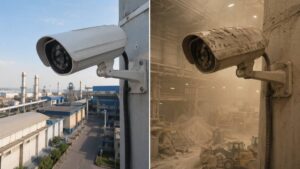
Night cameras are more sensitive to contamination than many people expect. During daylight, a small amount of dust or residue may not seem dramatic. At night, however, the same buildup can reflect infrared light and make the image much worse.
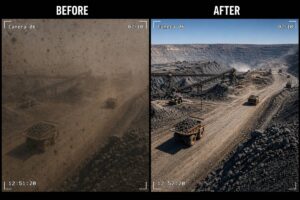
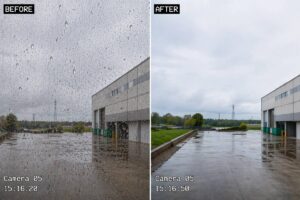
This happens because IR illumination interacts directly with anything close to the lens. Therefore, dust, cobwebs, water spots, residue, and debris can all scatter light back into the camera. Consequently, the picture may appear washed out, foggy, soft, or partially blocked.
Common causes of poor nighttime visibility include:
- dust on the lens area
- cobwebs close to the viewing path
- debris around the camera housing
- residue or film buildup
- reflected IR glare
- repeat contamination between cleaning visits
So while the camera may still be powered and recording, night vision clarity may already be compromised.
Why this problem is worse at night than during the day
The same contamination often looks far more severe after dark because the camera relies on IR light, low-light sensitivity, or nearby illumination. In other words, nighttime conditions amplify small visibility problems.
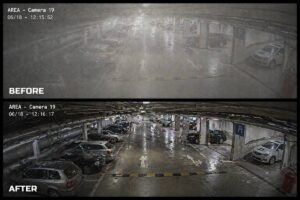
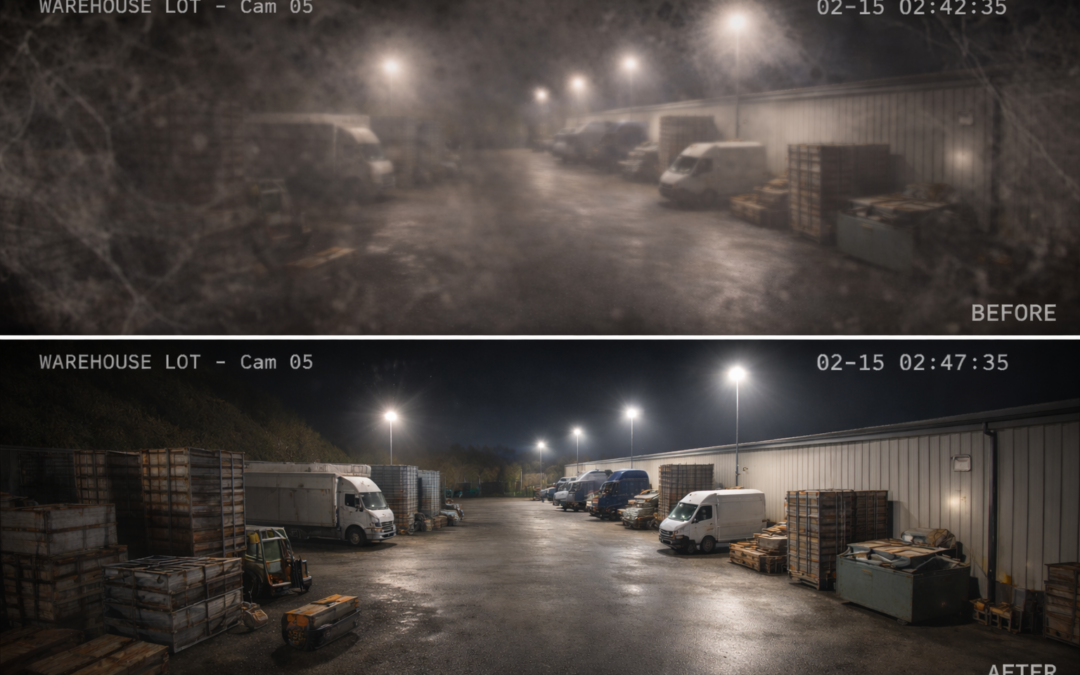
For example, a fine web strand that is barely noticeable in daylight can create strong glare at night. Similarly, a dusty lens area may look acceptable during the day while producing hazy, low-contrast footage after sunset. Because of that, many sites do not realize how poor the image has become until they check the camera under real nighttime conditions.
This can lead to:
- blurry footage
- lower contrast
- reduced identification detail
- bright IR reflection
- false alerts caused by insects or contamination
- missed events in low-light conditions
Therefore, the real test of camera performance is not how it looks at noon. It is how it performs after dark.
Why manual cleaning often does not solve the full issue
Manual cleaning can improve the image quickly. Nevertheless, it often does not solve the long-term problem.
If the camera is exposed to recurring dust, spiders, residue, or harsh outdoor conditions, contamination will return. As a result, the image may degrade again long before the next scheduled cleaning visit. On some sites, that means cameras repeatedly move between “temporarily clear” and “poor again.”
This becomes especially costly when cameras are:
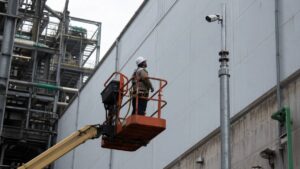
- mounted high
- located on perimeter lines
- exposed to dust-heavy environments
- installed in remote locations
- difficult to access safely
Consequently, reactive cleaning can become an endless cycle rather than a stable maintenance solution.
The hidden security impact of poor night vision clarity
Poor nighttime footage is not only a visual issue. It also affects how useful the surveillance system really is.
If a camera cannot provide clear detail after dark, security teams may struggle to confirm movement, review incidents, or identify vehicles and people. In addition, unclear footage can reduce trust in the system even when the camera is technically still online.
That creates several operational problems:
- slower incident review
- lower confidence in recorded evidence
- more nuisance alerts
- reduced usefulness of remote monitoring
- increased maintenance effort
- more repeated cleaning visits
So the real cost is not only image quality. It is also the security value lost while the camera continues operating below expectation.
What actually fixes the night vision clarity problem
The fix is not just “clean the lens once.” The better fix is to reduce the repeated contamination that keeps damaging nighttime visibility.
A stronger approach usually includes:
- checking image quality at night, not only during the day
- identifying cameras with repeated contamination
- cleaning the lens area and nearby buildup points
- reducing the delay between contamination and cleaning
- moving from reactive cleaning to preventive maintenance
That is where CAMDUSTER creates value.
How CAMDUSTER helps improve night vision clarity
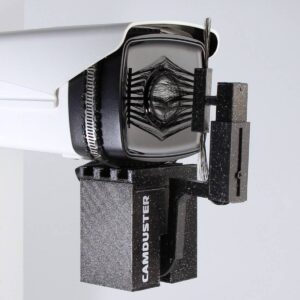
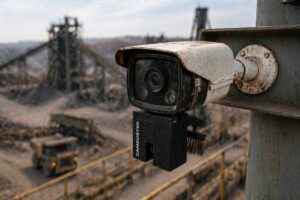
CAMDUSTER is a camera cleaning robot designed to help supported cameras stay clearer through a more preventive cleaning approach. Instead of waiting until the image becomes visibly poor and then sending someone to clean the camera again, operators can reduce the buildup that affects low-light performance over time.
This matters because the biggest threat to night vision clarity is often recurring contamination, not one single dirty event.
CAMDUSTER can help support:
- more consistent nighttime visibility
- fewer repeat manual cleaning trips
- lower maintenance burden
- improved camera reliability after dark
- better performance from existing surveillance systems
Therefore, the benefit is not only cleaner cameras. It is clearer footage when nighttime monitoring matters most.
Where this issue is most common
Some camera locations suffer more from night clarity problems than others.
Perimeter cameras
Fence lines and outer boundaries depend heavily on reliable night footage. However, these cameras are often exposed to dust, cobwebs, and weather.
Gate and entry cameras
These cameras need clear detail at night, but even small contamination can reduce readability and confidence.
Industrial sites
Dust, debris, and difficult access create a perfect combination for recurring low-light visibility problems.
Remote cameras
If access is slow or expensive, poor nighttime visibility may continue longer before cleaning happens.
Case study: a camera that looked acceptable by day and failed by night
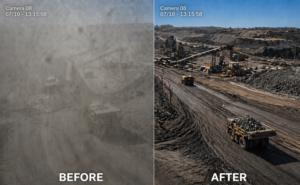
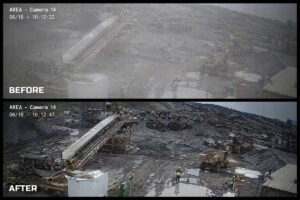
At one industrial site, a perimeter camera appeared acceptable during daytime inspections. Because of that, maintenance did not treat it as urgent. However, after dark, the image became hazy and partially washed out due to a combination of dust buildup and IR reflection near the lens area.
As a result, nighttime monitoring quality dropped and incident review became less reliable. The problem was not obvious until the site compared daytime and nighttime footage directly. Once the team identified the pattern, it became clear that reactive cleaning was not enough. The camera needed a more preventive approach to stay usable after dark.
That is exactly why CAMDUSTER matters. It helps sites address the recurring contamination that quietly reduces camera performance every night.
A smarter way to protect low-light surveillance
If your site depends on nighttime monitoring, camera cleaning should be part of the performance strategy, not just a maintenance afterthought.
A better process usually includes:
- testing cameras after dark
- prioritizing cameras with recurring glare or haze
- tracking repeat cleaning frequency
- identifying high-risk camera locations
- reducing repeated manual cleaning through preventive support
In other words, the goal is not just to restore the image once. The goal is to keep nighttime footage clearer, more consistent, and more reliable.
Internal resources to explore
To learn more about smarter camera maintenance, see:
- CAMDUSTER camera cleaning solutions
- Cobwebs at night: why they keep coming back
- The hidden cost of “free” manual camera cleaning
Conclusion
The night vision clarity problem is often caused by recurring contamination that becomes far more visible after dark. Dust, webs, residue, and glare can all reduce image quality even while the camera remains online and recording.
That is why the real fix is not only occasional manual cleaning. CAMDUSTER helps sites support clearer nighttime footage, reduce repeated cleaning effort, and improve reliability where low-light surveillance matters most.
FAQ
Frequently Asked Questions
Why does a camera look fine during the day but poor at night?
Because contamination near the lens may be less visible in daylight but much more damaging at night when IR light or low-light sensitivity amplifies glare and haze.
What causes poor night vision clarity on security cameras?
Common causes include dust, cobwebs, residue, debris, and other contamination near the lens area that reflects light back into the camera after dark.
Can a small amount of dust really affect night footage that much?
Yes. Even light dust or fine web strands can scatter infrared light and reduce contrast, making nighttime footage look hazy or washed out.
Why does manual cleaning not fully solve the problem?
Because in many environments the contamination returns quickly. The image improves temporarily, but the same issue often comes back before the next cleaning visit.
How does CAMDUSTER help improve night vision clarity?
CAMDUSTER supports a more preventive cleaning approach for supported cameras, helping reduce recurring buildup that affects visibility after dark.
Which camera locations usually have the biggest night clarity problems?
Perimeter cameras, gates, industrial areas, remote outdoor locations, and dust-heavy sites are among the most affected because they combine low-light dependence with recurring contamination.
Can poor night vision clarity create security risk?
Yes. If nighttime footage lacks clear detail, teams may miss important visual information during monitoring, incident review, or evidence checks.
Read more FAQs
Do cobwebs affect night vision more than daytime video?
Often yes. A web strand that looks minor during the day can create major glare or bright haze at night when the camera uses IR illumination.
Can CAMDUSTER help reduce repeated nighttime cleaning visits?
Yes. It supports a more preventive maintenance approach for supported cameras, helping reduce how often teams need to respond manually to recurring contamination.
Why is reactive cleaning risky for night surveillance?
Because the camera may already be underperforming after dark before anyone notices the problem. That means poor footage can persist during important hours.
Does this issue affect indoor cameras too?
Yes. Indoor cameras in dusty, industrial, or busy environments can also suffer from poor night or low-light clarity if contamination builds up near the lens area.
What should site managers check first when night footage looks hazy?
They should inspect the lens area, nearby housing surfaces, recurring contamination patterns, and whether the problem appears mainly after dark rather than during daytime.
Can poor night vision clarity increase false alerts?
Yes. Insects, cobwebs, and reflected glare can all contribute to nuisance alerts or unreliable motion detection at night.
Is CAMDUSTER useful only for outdoor cameras?
No. It is especially relevant outdoors, but it can also add value anywhere recurring contamination affects supported cameras and reduces visibility.
Can preventive cleaning improve the ROI of existing cameras?
Yes. When cameras stay clearer more consistently, sites get better performance and more dependable footage from the systems they already installed.
What is the biggest hidden cost of poor night vision clarity?
The biggest hidden cost is often reduced confidence in surveillance performance, especially when the camera appears to work but fails to provide useful detail after dark.
#CAMDUSTER #SecurityCameraCleaning #NightVisionProblems #IndustrialSites #PreventiveMaintenance