Factory Floor Cameras: How Dust and Vibration Lead to Blurry Footage
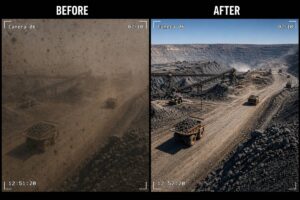
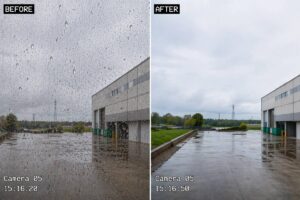
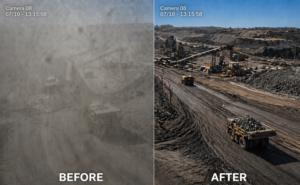
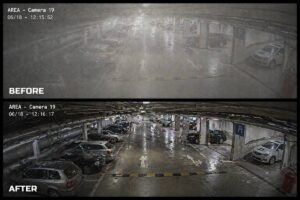
Factory floor camera cleaning is easy to underestimate until image quality starts to drop. On busy production sites, cameras are exposed to constant dust, airborne particles, machinery vibration, and repeated operational movement. As a result, footage can become blurry even when the camera itself is still powered and recording normally.
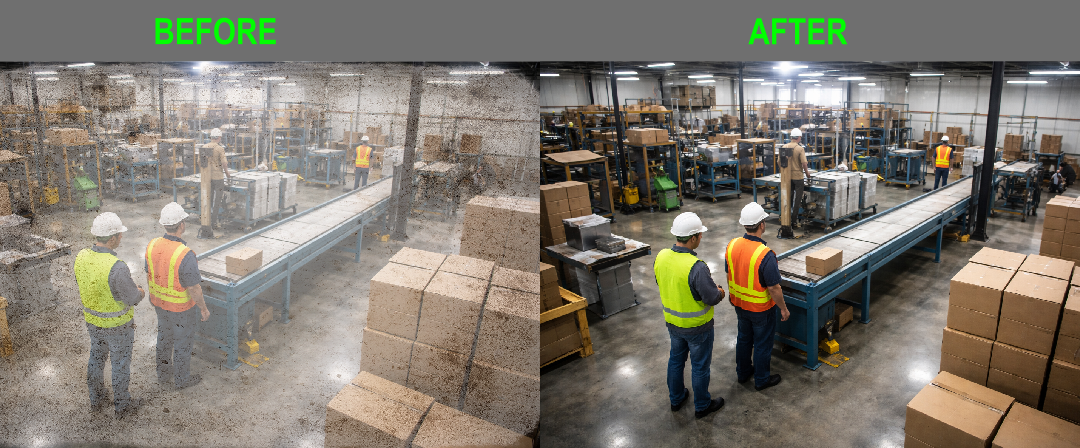
That is a serious problem because factory cameras are often used for safety monitoring, process visibility, perimeter awareness, incident review, and production oversight. However, when the lens area gets dirty or vibration affects image clarity, the video may no longer provide the detail teams actually need. Therefore, factories need a smarter maintenance strategy than occasional manual wipe-downs.
Why factory floor cameras lose image quality
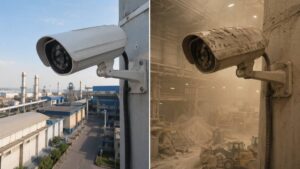
Factory environments place cameras under constant stress. Dust from materials, production residue, packaging particles, and general airborne debris can settle on the lens area over time. In addition, heavy machinery, conveyors, motors, and nearby equipment can create continuous vibration.
Because of that, image quality can decline for more than one reason at the same time. In many cases, the problem is not only contamination. It is contamination combined with vibration and constant activity around the camera position.
Common causes include:
- airborne dust from production activity
- fine residue settling on the lens area
- vibration from machinery or conveyors
- mounting points affected by nearby equipment
- changing light conditions across shifts
- repeated contamination in high-traffic zones
So while the camera may remain online, the footage itself can become less useful for monitoring and review.
Why blurry footage creates operational problems
A blurry factory camera is not just an image-quality issue. It is a visibility issue that affects decision-making.
For example, if a camera is monitoring a production line, loading area, internal traffic route, or restricted zone, poor image clarity can make it harder to verify events, inspect activity, or review incidents accurately. Moreover, when dust buildup is combined with vibration, the footage may look unstable, soft, or inconsistent during critical moments.
This can lead to:
- reduced visibility on key production areas
- lower confidence in camera footage
- slower incident review
- missed visual details
- more manual cleaning visits
- higher maintenance effort over time
Therefore, factory floor camera cleaning should be treated as part of operational reliability, not just housekeeping.
Why manual cleaning is not enough
At first, manual cleaning appears to be a simple solution. A technician wipes the camera and visibility improves. Nevertheless, the same issue often returns because the environment is still producing dust and motion around the camera.
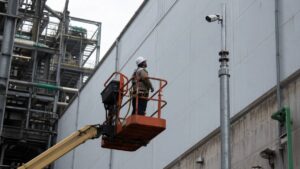
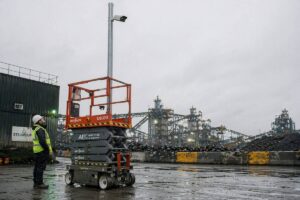
That becomes expensive when cameras are mounted above production lines, installed over factory traffic areas, or placed in difficult-to-access indoor positions. In these cases, each cleaning visit may require coordination, ladders, elevated access equipment, or maintenance downtime.
As a result, the real cost includes much more than a few minutes of cleaning. It may include:
- technician labor
- access planning
- elevated access tools
- production-area coordination
- repeat visits to the same camera
- lost time between cleanings while footage remains poor
Consequently, reactive cleaning can become a repeated maintenance burden, especially across multiple cameras.
The added problem of vibration
Dust is not the only challenge on factory floors. Vibration can also reduce image quality, especially when cameras are mounted near active machinery or structures that transfer movement.
Even when vibration does not fully shake the image, it can still reduce sharpness, make zoomed views less reliable, or increase the perception of blur in already dusty conditions. Therefore, some factory camera problems are caused by both contamination and mounting environment.
This matters because teams may clean the lens repeatedly while the footage still looks poor. In those cases, the site is not dealing with one issue, but with two overlapping causes of image degradation.
How CAMDUSTER helps on factory floors
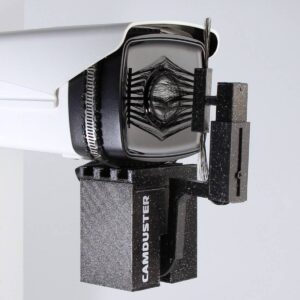
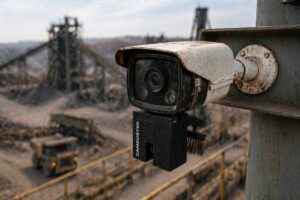
CAMDUSTER is a camera cleaning robot designed to help supported cameras stay clearer in demanding environments. Instead of relying only on repeated manual cleaning, factory operators can move toward a more preventive cleaning approach.
That is important because the value of CAMDUSTER is not just one cleaning event. The real value is in reducing the repeated maintenance effort tied to recurring contamination.
On factory floors, CAMDUSTER can help support:
- more consistent camera visibility
- fewer repeat cleaning trips
- lower manual maintenance effort
- improved camera uptime
- better use of existing monitoring systems
Therefore, factory floor camera cleaning becomes easier to manage when sites reduce how often teams need to respond manually to recurring lens contamination.
Where this matters most in factories
Some factory camera positions are especially vulnerable to dust, movement, and blurry footage.
Production lines
These cameras often face airborne particles, continuous activity, and equipment vibration. As a result, image quality can degrade gradually without immediate notice.
Conveyor zones
Conveyors can generate both dust and vibration. Consequently, cameras in these areas may need more frequent attention.
Loading and material handling areas
Forklifts, pallets, packaging dust, and movement create challenging conditions for reliable visibility.
Elevated indoor camera positions
When cameras are mounted high above the floor, every cleaning visit becomes less convenient and more expensive.
Case study: repeated cleaning near a production conveyor
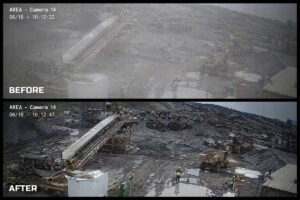
At one factory site, a camera monitoring a conveyor transfer area kept producing soft, unreliable footage. Initially, the team assumed the issue was only dust buildup. Manual cleaning improved the image temporarily, but the same problem returned again and again.
After closer review, the site identified two overlapping causes: recurring airborne residue and ongoing vibration from nearby equipment. As a result, the camera needed repeated attention while still failing to deliver consistently sharp footage.
The maintenance team realized the cost was not one cleaning visit. Instead, it was the repeated cycle of poor visibility, technician response, and lost confidence in the footage. By shifting toward a more preventive cleaning strategy and reviewing the camera environment more carefully, the site reduced repeat interventions and improved monitoring reliability.
That is where CAMDUSTER creates value. It helps reduce the cleaning burden around recurring contamination so teams can focus on keeping critical views usable.
A smarter maintenance strategy for factory cameras
If your factory cameras regularly lose image clarity, the best response is to look beyond the lens alone. A stronger maintenance strategy should review both contamination patterns and environmental conditions.
That usually means:
- identifying cameras in dust-heavy areas
- tracking repeat cleaning frequency
- checking whether vibration affects image stability
- prioritizing difficult-to-access cameras
- shifting from reactive cleaning to preventive maintenance
In other words, the goal is not simply to clean the camera after the footage becomes bad. The goal is to keep critical factory cameras usable more consistently.
Internal resources to explore
To learn more about smarter camera maintenance, see:
- CAMDUSTER camera cleaning solutions
- The hidden cost of “free” manual camera cleaning
- Cobwebs at night: why they keep coming back
Conclusion
Factory environments make camera maintenance challenging because dust and vibration often affect image quality at the same time. That is why factory floor camera cleaning should be treated as a real maintenance and performance issue.
When sites rely only on reactive manual cleaning, costs rise and footage quality may still remain inconsistent. CAMDUSTER offers a smarter way to support camera visibility, reduce repeated cleaning effort, and improve maintenance efficiency across factory floors.
FAQ
Frequently Asked Questions
Why do factory floor cameras become blurry so quickly?
Factory cameras are often exposed to airborne dust, production residue, and vibration from nearby equipment. Because of that, image quality can decline faster than teams expect.
Can vibration make a camera look blurry even if the lens is clean?
Yes. If a camera is mounted near machinery, conveyors, or moving structures, vibration can reduce sharpness or create unstable-looking footage even when the lens is clean.
How can I tell whether the problem is dust or vibration?
If cleaning improves the image only briefly or not fully, vibration may also be contributing. In many factory environments, both contamination and mounting conditions affect image quality together.
Which factory camera locations usually need the most attention?
Production lines, conveyor areas, material handling zones, loading points, and elevated indoor camera positions are often the most challenging because they combine dust, activity, and difficult access.
Why does manual cleaning become expensive on factory floors?
The real cost includes technician labor, access equipment, coordination around production activity, and repeat visits when the same cameras keep getting dirty again.
How does CAMDUSTER help with factory floor camera cleaning?
CAMDUSTER supports a more preventive cleaning approach for supported cameras, helping reduce repeated manual cleaning visits and maintain clearer visibility over time.
Is CAMDUSTER relevant only for large factories?
No. Any factory with recurring camera contamination, difficult camera access, or repeated cleaning effort can benefit from a more preventive maintenance approach.
Read more FAQs
Can CAMDUSTER help reduce cleaning work above production lines?
Yes. It is especially valuable where cameras are high-mounted and repeated manual access creates extra labor or disruption.
Does dust always mean the camera needs replacement?
No. In many cases, the camera itself still works, but the lens area becomes contaminated. The issue is often maintenance, not camera failure.
What is the biggest hidden cost of blurry factory footage?
Beyond cleaning labor, the hidden cost includes slower incident review, reduced confidence in monitoring, missed visual details, and more time spent troubleshooting image problems.
Can CAMDUSTER help in packaging or material handling zones?
Yes. These areas often generate recurring airborne particles and repeated contamination, which makes preventive cleaning especially valuable.
Is CAMDUSTER useful for security integrators working with factories?
Yes. It gives integrators a practical value-added solution for customers dealing with repeated contamination and camera maintenance effort.
Do factory cameras need a different maintenance plan than office or retail cameras?
Usually yes. Factory environments are more demanding, so maintenance planning should reflect contamination levels, vibration exposure, and access difficulty.
Can preventive cleaning improve the value of existing factory cameras?
Yes. Cleaner cameras deliver more reliable visibility, which helps sites get better performance from the surveillance equipment they already own.
What should facility managers track to understand cleaning cost?
They should track cleaning frequency, labor time, access effort, camera location difficulty, and how often the same cameras lose useful visibility.
Is CAMDUSTER useful only for indoor factory cameras?
No. It can also be relevant for outdoor factory cameras where dust, debris, and recurring contamination affect visibility and maintenance cost.
#CAMDUSTER #AutomaticCameraCleaning #BlurryFootage #FactorySecurity #PreventiveMaintenance