
Warehouse Cameras and Airborne Dust: Why Traffic Keeps Making Them Dirty
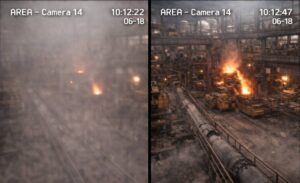
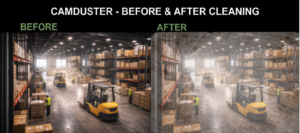
Warehouse camera cleaning is often more demanding than it first appears. A warehouse may look controlled, structured, and relatively clean. However, once daily traffic begins, the environment changes. Forklifts move, trucks load and unload, pallets shift, and fine particles rise into the air. As a result, cameras can collect dust faster than teams expect.
That is why this issue deserves more attention. The problem is not only dirt on the lens. The real issue is the constant airborne dust created by routine warehouse movement. Therefore, if the same cameras keep losing clarity again and again, the site is not dealing with random contamination. It is dealing with a repeat traffic-driven maintenance problem.
Why warehouse traffic creates so much airborne dust
Many warehouse managers think of dust as a surface issue. In reality, moving vehicles and constant floor activity turn it into an airborne issue.
Forklifts, pallet jacks, trucks, packaging movement, and tire traffic all disturb fine particles throughout the day. Consequently, even a warehouse that is cleaned regularly can still have ongoing dust movement in the air. Those particles then settle on equipment, including cameras.
Common sources include:
- forklift traffic
- loading bay movement
- tire dust and floor disturbance
- packaging particles
- pallet handling
- open doors that pull in outside dust
- traffic around internal warehouse lanes
Because of that, warehouse camera cleaning becomes a recurring need in locations with constant motion rather than a one-time task in visibly dirty spaces.
Why camera visibility drops faster in busy warehouse zones
Not every camera gets dirty at the same rate. In warehouses, the cameras most exposed to motion and airflow usually degrade the fastest.
For example, cameras near loading docks, traffic lanes, internal intersections, dispatch zones, and open roller doors are often hit with the most airborne particles. As a result, their image quality may fall faster than cameras in quieter storage aisles or more protected indoor positions.
This can lead to:
- reduced image sharpness
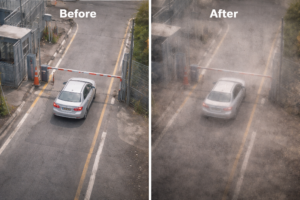
- hazy or soft footage
- more frequent repeat cleaning
- lower confidence in monitoring
- weaker incident review quality
- higher maintenance attention on the same cameras
So the real problem is not simply that dust exists. The problem is that warehouse activity keeps putting that dust back into the air every day.
Why this is more than a housekeeping issue
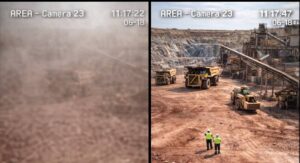
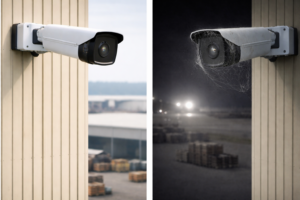
A dusty warehouse camera does not just look neglected. It reduces the practical value of the surveillance system.
If a camera is used to monitor loading, vehicle movement, goods handling, safety zones, or internal traffic, reduced clarity can make it harder to confirm what happened or review incidents accurately. Moreover, when the same camera repeatedly loses visibility, maintenance teams end up spending time on the same predictable problem again and again.
Therefore, warehouse camera cleaning should be treated as an uptime and reliability issue, not just a cleaning detail.
Why manual cleaning often becomes repetitive
Of course, manual cleaning restores the image for the moment. Nevertheless, it rarely changes the environment that caused the dust buildup in the first place.
If forklifts and warehouse traffic continue creating airborne particles all day, the camera lens area is likely to collect contamination again soon after. As a result, the site may keep cleaning the same camera over and over, especially in high-traffic zones.
This becomes more expensive when cameras are:
- mounted high above lanes or loading areas
- difficult to access safely
- located in active operational zones
- expected to provide consistently clear footage
- repeatedly affected before the next planned cleaning cycle
Consequently, reactive manual cleaning often becomes a maintenance loop rather than an efficient long-term strategy.
Why high-mounted warehouse cameras create hidden cost
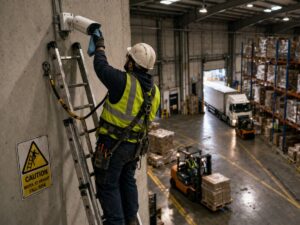
The higher the camera, the less convenient every cleaning trip becomes. In warehouses, many cameras are mounted above traffic routes, high walls, loading areas, or structural beams. Therefore, even basic cleaning may require ladders, lift equipment, area clearance, or operational coordination.
That means the true cost of warehouse camera cleaning can include:
- technician labor
- access setup
- temporary disruption below the camera
- repeat visits to the same location
- time spent verifying image quality after cleaning
So while one visit may seem minor, the repeated cost adds up quickly over time.
How CAMDUSTER helps reduce repeat cleaning effort
CAMDUSTER is a camera cleaning robot designed to help supported cameras stay clearer through a more preventive cleaning approach. Instead of relying only on manual cleaning after visibility has already dropped, operators can reduce the recurring contamination that keeps triggering repeat maintenance.
That matters because the value of CAMDUSTER is not just one cleaning event. The real value is reducing the repeated labor burden tied to traffic-driven dust buildup.
CAMDUSTER can help support:
- fewer repeat manual cleaning visits
- more consistent camera visibility
- lower labor tied to recurring dust contamination
- better maintenance planning
- improved use of existing surveillance cameras
Therefore, warehouse camera cleaning becomes easier to manage when the site shifts from repeated reactive cleaning to a more preventive strategy.
Where this use case is strongest in warehouses
Some warehouse camera positions are especially vulnerable to airborne dust.
Loading bays
Open doors, trucks, and repeated movement create strong dust exposure.
Internal traffic lanes
Forklift routes and intersections disturb particles continuously throughout the day.
Dispatch and receiving zones
Frequent handling activity and packaging movement can quickly affect nearby cameras.
High-mounted overview cameras
These cameras are often difficult to access, so recurring cleaning becomes more expensive.
Case study: a camera above a warehouse traffic lane
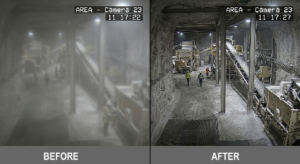
At one warehouse site, a camera mounted above a busy forklift lane kept losing image clarity even though the building itself was well maintained. Initially, the issue was treated as occasional dust and handled with manual cleaning.
However, the pattern became impossible to ignore. The same camera repeatedly collected fine buildup because traffic below it disturbed particles every day. As a result, maintenance staff kept returning to the same location while still dealing with recurring visibility loss between visits.
Once the site reviewed the issue as a traffic-driven contamination pattern rather than a random cleaning problem, the strategy changed. By moving toward a more preventive cleaning approach, the team reduced repeat interventions and improved image consistency in that high-traffic zone.
That is where CAMDUSTER creates value: by helping sites manage the contamination pattern, not just the latest dusty lens.
A smarter way to evaluate warehouse camera maintenance
If your warehouse cameras keep getting dirty, start by looking at movement patterns rather than just the cameras themselves.
A stronger maintenance strategy usually includes:
- identifying the highest-traffic camera locations
- tracking how quickly visibility degrades
- prioritizing high-mounted or difficult-access cameras
- reviewing cameras near loading or dispatch activity
- reducing repeated reactive cleaning where possible
In other words, the goal is not only to clean the lens after it gets dusty. The goal is to reduce the repeat maintenance burden caused by constant warehouse traffic.
Internal resources to explore
To learn more about smarter camera maintenance, see:
- CAMDUSTER camera cleaning solutions
- The hidden cost of “free” manual camera cleaning
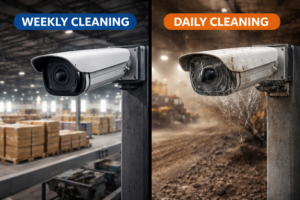
- Set it and forget it cleaning schedules (weekly vs daily)
Conclusion
Warehouse camera cleaning becomes a repeat problem when daily traffic keeps fine dust moving through the air. Even well-run sites can struggle with camera visibility if forklifts, trucks, and handling activity constantly recreate the same contamination pattern.
That is why the better answer is not just another manual wipe-down. CAMDUSTER helps warehouses reduce repeat cleaning effort, support clearer footage, and create a more preventive approach to camera maintenance in high-traffic environments.
FAQ
Frequently Asked Questions
Why do warehouse cameras get dusty even when the building looks clean?
Because daily traffic keeps fine particles moving through the air. Forklifts, trucks, pallets, and floor disturbance can all create airborne dust that settles on cameras over time.
Which warehouse camera locations usually get dirty the fastest?
Loading bays, forklift lanes, dispatch zones, receiving areas, and cameras near open doors usually collect contamination the fastest because traffic and airflow are strongest there.
Can airborne dust really affect footage that much?
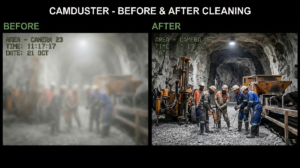
Yes. Even light dust buildup can reduce sharpness, create haze, and lower the clarity needed for monitoring, safety review, or incident investigation.
Why does the same warehouse camera keep needing cleaning?
Because the same traffic pattern keeps disturbing dust in that area. If the environmental cause stays the same, the contamination often returns quickly after manual cleaning.
How does CAMDUSTER help with warehouse camera cleaning?
CAMDUSTER supports a more preventive cleaning approach for supported cameras, helping reduce repeated manual cleaning visits and maintain clearer visibility in high-traffic areas.
Is this only a problem for outdoor warehouse cameras?
No. Indoor warehouse cameras can also be heavily affected, especially in active traffic lanes, loading areas, and packaging zones where particles stay airborne.
Why is manual cleaning often inefficient in warehouses?
Because it restores the image temporarily but does not reduce the ongoing airborne dust caused by daily movement. As a result, the same cameras often need attention again soon after.
Read more FAQs
Do high-mounted warehouse cameras create a bigger maintenance burden?
Yes. The higher the camera, the more labor, access planning, and operational disruption each repeat cleaning visit can create.
Can one busy forklift lane really affect camera clarity that much?
Yes. In active warehouses, one high-traffic route can keep disturbing enough fine dust to create repeat buildup on nearby cameras.
What should site managers track to understand the true cost?
They should track cleaning frequency, traffic intensity, access difficulty, labor time, and how often the same camera locations lose useful visibility.
Does this problem affect security and operations equally?
It can affect both. Dusty footage can reduce incident review quality, weaken monitoring confidence, and make warehouse activity harder to verify clearly.
Can CAMDUSTER help reduce emergency cleaning visits in busy warehouses?
Yes. By supporting a more preventive approach for supported cameras, it can help reduce extra reactive visits caused by recurring contamination.
Should all warehouse cameras follow the same cleaning schedule?
No. Cameras near high-traffic or high-dust zones usually need more attention than cameras in quieter, more protected locations.
Is CAMDUSTER useful only for very large warehouses?
No. Any warehouse with recurring camera contamination, difficult access, or repeated manual cleaning effort can benefit from a more preventive solution.
Can preventive cleaning improve the ROI of warehouse surveillance systems?
Yes. When cameras stay clearer more consistently, the site gets more reliable performance and better value from the surveillance equipment already installed.
What is the biggest hidden cost of traffic-driven dust on cameras?
The biggest hidden cost is repetition: the same high-traffic camera locations keep demanding labor, cleaning time, and troubleshooting without changing the underlying cause.
#CAMDUSTER #CameraCleaningRobot #DustRemoval #WarehouseSafety #OperationalEfficiency