Mining Camera Cleaning: How to Keep Critical Cameras Clear in Dust-Heavy Zones
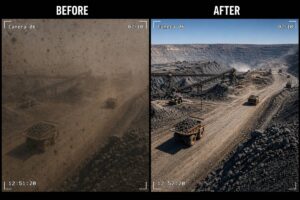
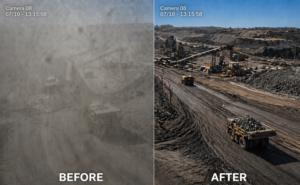
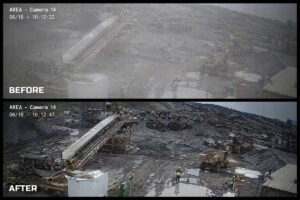
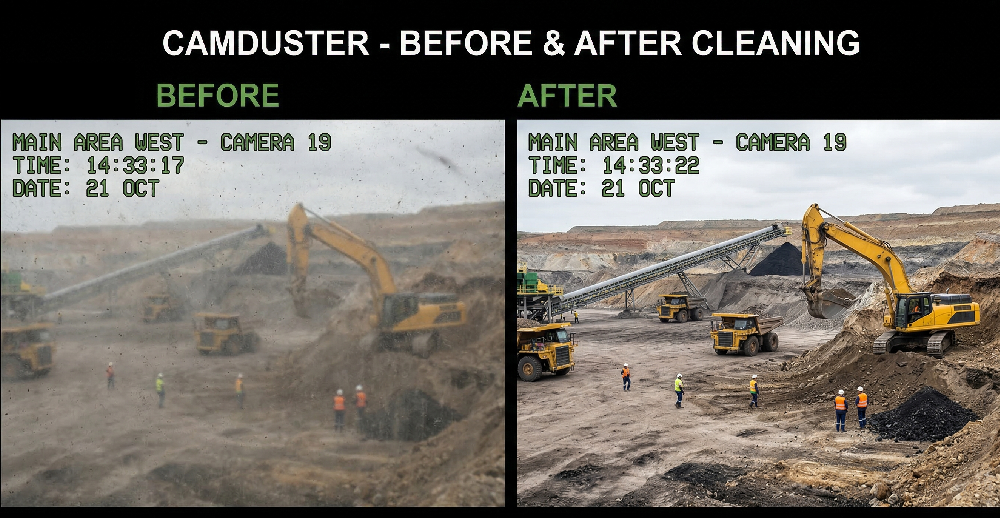
Mining camera cleaning is not a minor maintenance task. In dust-heavy zones, camera visibility can drop fast, especially when equipment movement, blasting, haul roads, and open material handling keep fine particles in the air. As a result, critical cameras can lose image clarity long before anyone notices a serious problem.
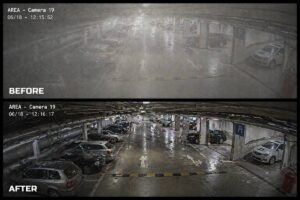
That matters because mining sites depend on cameras for safety, perimeter awareness, traffic monitoring, process visibility, and incident review. However, when dust builds up on the lens area, the camera may still be online while the image quality becomes unreliable. Therefore, mining operations need more than occasional wipe-downs. They need a smarter way to manage recurring contamination.
Why mining cameras get dirty so quickly
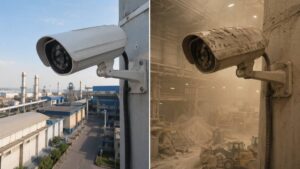
Mining environments are tough on equipment, and cameras are no exception. Dust is constantly generated by vehicle movement, crushing, loading, transfer points, and changing weather. Consequently, even well-positioned cameras can collect buildup over time.
In addition, many cameras are installed near roads, conveyor systems, stockpiles, gates, and work zones where airborne particles are most active. Because of that, mining camera cleaning often becomes a repeat task rather than a one-time fix.
Common causes of rapid contamination include:
- haul road dust
- blasting residue
- wind-driven fine particles
- conveyor and transfer point debris
- vehicle activity near camera locations
- exposed outdoor mounting positions
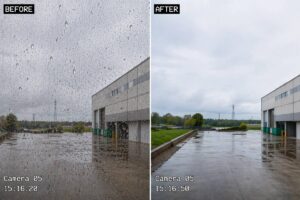
So while the camera itself may be functioning correctly, the lens area can still become dirty enough to reduce useful visibility.
Why poor camera visibility creates bigger operational risks
A dirty lens does more than make the image look bad. It can reduce the practical value of the entire surveillance system.
For example, if a camera is monitoring a haul road, access point, or critical process area, reduced clarity can make it harder to see hazards, verify activity, or review incidents accurately. Moreover, night visibility can become even worse when dust and residue reflect light back into the image.
This can lead to:
- blurry or low-contrast footage
- reduced confidence in remote monitoring
- slower incident review
- missed visual details
- more reactive maintenance trips
- higher operating cost per camera
Therefore, mining camera cleaning should be treated as an uptime and reliability issue, not just a cleaning chore.
Why manual cleaning becomes expensive in mining
At first, manual cleaning can seem simple. Someone goes to the camera, wipes the lens area, and restores visibility. Nevertheless, the real cost is often much higher than expected.
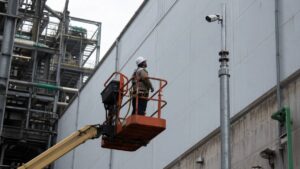
Mining cameras are frequently mounted in hard-to-reach or safety-controlled locations. As a result, each cleaning visit may involve travel time, access planning, PPE, work permits, or support equipment. In some cases, a camera may require repeated attention because dust returns quickly after cleaning.
That means the true cost includes far more than a few minutes with a cloth. It often includes:
- technician labor
- travel across large sites
- access coordination
- safety procedures and PPE
- ladders, lifts, or elevated access
- repeat visits to the same camera
Consequently, repeated manual cleaning can become a hidden but significant maintenance expense.
The problem with reactive maintenance
Many sites clean cameras only after the image quality becomes obviously poor. Although that approach may seem practical, it creates avoidable problems.
First, the camera may deliver suboptimal footage for days or weeks before anyone responds. Second, once the issue is spotted, the site must schedule another manual visit. Third, the same contamination often returns because the environment has not changed.
As a result, reactive cleaning creates a cycle of degraded performance followed by repeated labor. In contrast, a preventive approach aims to keep cameras usable before contamination causes operational issues.
How CAMDUSTER helps in dust-heavy zones
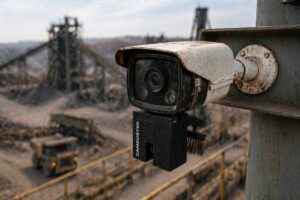
CAMDUSTER is a camera cleaning robot designed to help supported cameras stay clearer in demanding environments. Instead of relying only on repeated manual cleaning, mining operators can move toward a more preventive maintenance strategy.
This matters because the value of CAMDUSTER is not just in cleaning once. The real value is in reducing the repeat burden around recurring contamination.
In mining applications, CAMDUSTER can help support:
- more consistent camera visibility
- fewer repeated site visits
- lower labor tied to routine cleaning
- improved maintenance planning
- better use of installed surveillance assets
Therefore, mining camera cleaning becomes more manageable when the site reduces how often teams need to respond manually to the same lens contamination problem.
Where CAMDUSTER is especially relevant in mining
Some mining camera locations are much harder and more expensive to maintain than others. That is exactly where preventive cleaning creates the most value.
Haul roads and traffic zones
These cameras are exposed to constant dust from heavy vehicle movement. Consequently, visibility can decline quickly.
Access gates and perimeter points
These locations are important for site control and monitoring. However, they are often exposed to outdoor dust and changing weather.
Conveyor and transfer areas
Material movement creates repeated airborne debris. As a result, cameras in these zones often need more frequent cleaning.
Elevated or remote camera positions
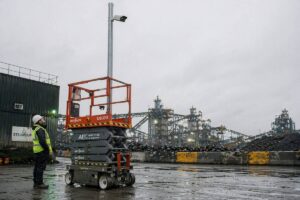
When a camera is difficult to reach, every maintenance visit becomes more expensive. Therefore, reducing repeat visits matters even more.
Case study: repeated cleaning at a dusty haul-road camera
At one mining site, a camera overlooking a busy haul-road intersection kept losing image clarity because of dust accumulation. The camera remained operational, but the footage became progressively harder to use for monitoring vehicle movement and reviewing incidents.
Initially, the site relied on manual cleaning. However, each service visit required travel across the site, safety preparation, and maintenance labor. In addition, the same camera often needed cleaning again soon after, especially during dry and high-traffic periods.
Once the site evaluated the full pattern, the issue became clear: the real cost was not a single dirty lens, but the repeated effort required to keep that camera usable. By shifting toward a more preventive maintenance approach, the team reduced repeated cleaning interventions and improved visibility consistency in a critical zone.
That is why CAMDUSTER makes sense in mining. It helps reduce the operational drag caused by recurring contamination in areas where visibility matters and access is costly.
A smarter maintenance strategy for mining cameras
If your site depends on reliable camera visibility, it is worth reviewing how often cameras lose clarity, how much effort is spent cleaning them, and which locations cause the most maintenance burden.
A stronger strategy usually includes:
- identifying high-dust camera positions
- tracking repeat cleaning frequency
- prioritizing hard-to-access cameras
- reducing reactive site visits where possible
- using preventive cleaning support for recurring contamination
In other words, the goal is not only to clean the camera. The goal is to keep critical cameras usable with less repeated disruption.
Internal resources to explore
To learn more about camera maintenance and recurring contamination, see:
- CAMDUSTER camera cleaning solutions
- The hidden cost of “free” manual camera cleaning
- Cobwebs at night: why they keep coming back
Conclusion
Mining environments are hard on surveillance equipment, and dust-heavy zones make camera visibility difficult to maintain. That is why mining camera cleaning should be treated as a serious maintenance and performance issue.
When sites rely only on reactive manual cleaning, labor costs rise and visibility can remain poor between visits. CAMDUSTER offers a smarter way to support critical cameras, reduce repeated cleaning effort, and improve maintenance efficiency in demanding mining environments.
FAQ
Frequently Asked Questions
Why is mining camera cleaning more difficult than cleaning cameras at other sites?
Mining environments produce constant airborne dust from traffic, material movement, blasting, and wind exposure. Because of that, cameras often get dirty faster and need more frequent attention than cameras in cleaner environments.
Which mining camera locations usually get dirty the fastest?
Haul roads, transfer points, conveyor areas, gates, perimeter roads, and exposed outdoor positions are usually the worst. These areas combine heavy activity with airborne dust and debris.
Can a dusty camera still be online but give poor footage?
Yes. A camera may still be powered and recording while the lens area is dirty enough to reduce useful visibility. That is why image quality checks matter as much as device uptime.
How often do mining cameras usually need cleaning?
That depends on location, season, traffic, and exposure. Cameras near dusty roads or process areas may need attention far more often than cameras in sheltered positions.
Why does manual cleaning become expensive on mining sites?
Because the true cost includes technician time, travel across the site, access planning, PPE, safety procedures, and repeat visits. On large sites, those factors add up quickly.
How does CAMDUSTER help with mining camera cleaning?
CAMDUSTER supports a more preventive cleaning approach for supported cameras, helping sites reduce repeated manual cleaning visits and maintain clearer visibility in dust-heavy zones.
Is CAMDUSTER only useful on perimeter cameras?
No. It is also relevant for haul roads, process monitoring areas, access points, and other mining locations where recurring contamination affects camera usability.
Read more FAQs
Can CAMDUSTER help reduce cleaning visits to elevated cameras?
Yes. It is especially valuable where cameras are difficult to reach and where repeat manual cleaning creates extra labor, access effort, or safety burden.
Does mining dust affect night footage differently?
It can. Dust and residue may reflect light and reduce contrast, which can make nighttime visibility even less reliable in some conditions.
What is the biggest hidden cost of dirty mining cameras?
Many sites focus on cleaning labor, but the hidden cost also includes poor footage, delayed incident review, reduced visibility in critical zones, and lower confidence in remote monitoring.
Is CAMDUSTER relevant for remote mining operations?
Yes. Remote operations often have higher labor and travel costs per maintenance visit, so reducing repeated cleaning trips can be especially valuable.
Can security integrators position CAMDUSTER for mining projects?
Yes. It can be presented as a value-added solution for customers dealing with recurring dust contamination, difficult access, and high ongoing cleaning effort.
Do mining cameras need a different maintenance plan than standard site cameras?
Usually yes. Mining sites are more aggressive environments, so camera maintenance plans should reflect contamination frequency, access difficulty, and the importance of each viewing point.
Can preventive cleaning improve the value of existing mining cameras?
Yes. When cameras stay clearer more consistently, operators get more reliable performance from the surveillance equipment already installed on site.
What should site managers track to understand camera cleaning cost?
They should track cleaning frequency, labor time, travel time, access equipment needs, safety requirements, and how often the same cameras lose useful visibility.
Is CAMDUSTER relevant only for very large mines?
No. Any mining site with recurring dust exposure, difficult-to-access cameras, or repeated manual cleaning effort can benefit from a more preventive approach.
#CAMDUSTER #AutomaticCameraCleaning #DustRemoval #MiningOperations #OperationalEfficiency