Why mining could be your biggest win with CAMDUSTER
CAMDUSTER mining camera cleaning can create especially strong value because mining sites often combine several of the hardest surveillance maintenance conditions in one place. Dust is constant, camera access is often difficult, and manual cleaning visits can quickly become expensive. As a result, mining may be one of the strongest use cases for a more preventive camera cleaning strategy.
Many sites treat dirty cameras as a minor maintenance issue. However, mining environments rarely make camera cleaning minor. A lens wipe may take only a few minutes, yet the real burden usually includes travel, PPE, access coordination, site rules, and repeated returns when contamination builds up again. Therefore, CAMDUSTER mining camera cleaning should be evaluated not only as a cleaning function, but as an operational efficiency advantage.
Why mining sites are unusually demanding for cameras
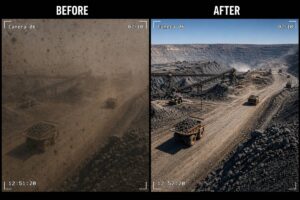
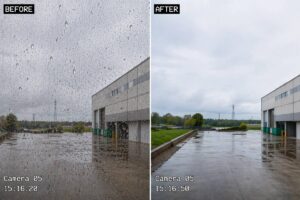
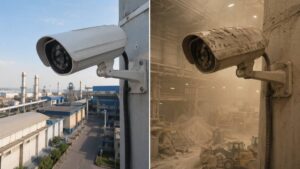
Mining operations create a combination of conditions that can reduce image quality faster than many other environments. For example, cameras may be exposed to haul road dust, material transfer debris, wind-driven particulate, dry season buildup, and weather-related contamination.
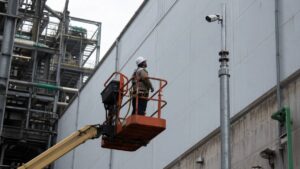
At the same time, those cameras are often installed where visibility is critical, not where access is easy. Consequently, even routine maintenance can consume far more time and effort than expected.
Common mining camera stress factors include:
- heavy airborne dust
- remote camera locations
- large site travel distances
- elevated mounting points
- outdoor weather exposure
- recurring contamination near roads, conveyors, and loading areas
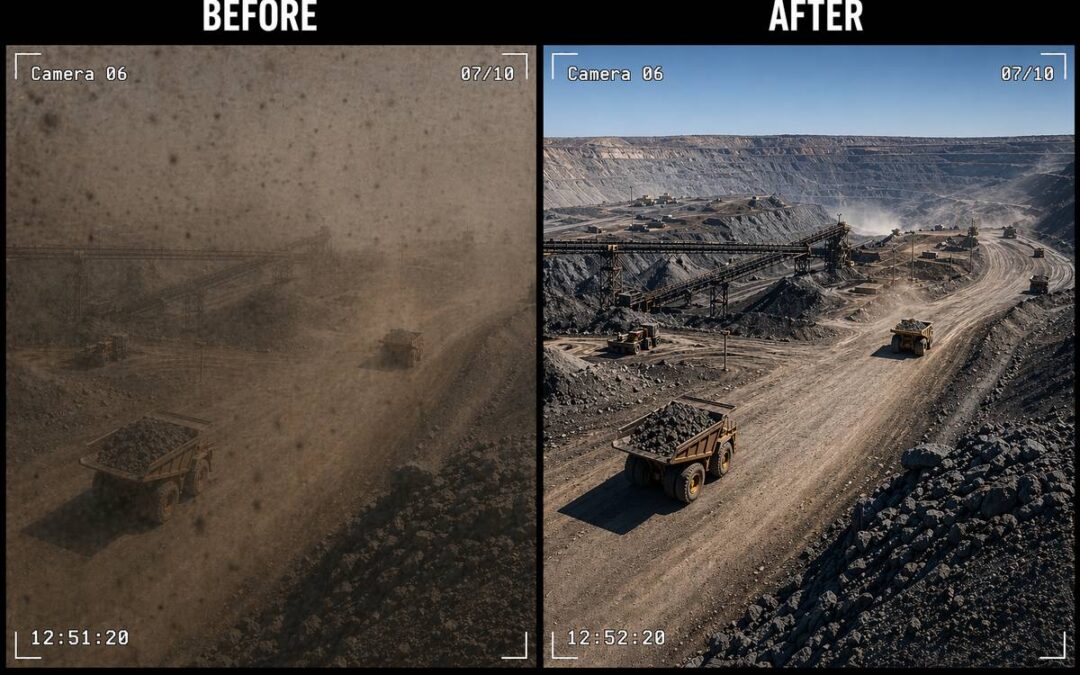
Because of this, mining cameras often remain online while footage becomes less useful than operators realize.
Why the real cost is often access, not cleaning
A dirty lens can sometimes be cleaned quickly. Nevertheless, that does not mean the total job is small.
On a mining site, a cleaning visit may involve:
- technician travel across a large operation
- PPE and site safety requirements
- lift, ladder, or vehicle access
- coordination with operations
- time away from other maintenance work
- repeat visits when dust returns quickly
Therefore, the largest cost is often not the few minutes spent near the camera. Instead, it is the full access burden around that cleaning event.
This is exactly why CAMDUSTER mining camera cleaning can create a stronger return in mining than in easier-to-access environments.
Where mining sites lose the most value
Dirty cameras do not only create maintenance cost. They also reduce the practical value of the surveillance system itself.
For example, a camera may still be recording, yet the footage may no longer provide the detail needed for:
- traffic observation
- perimeter awareness
- gate monitoring
- process visibility
- incident review
- remote supervision of isolated zones
As a result, the site may pay for cameras, networking, storage, and monitoring while receiving lower-quality visibility than expected.
Why mining is often the best ROI case
Some industries have dirty cameras. Mining usually has dirty cameras plus difficult access plus repeated contamination. That combination matters.
Mining often creates stronger ROI because:
- contamination returns frequently
- the site is physically large
- camera locations are often remote
- manual service visits are costly
- visibility matters for safety and operations
- repeat cleaning can become a long-term burden
In other words, mining does not just create a camera cleaning need. It creates a repeat maintenance pattern that can keep draining labor and time.
How CAMDUSTER helps mining sites
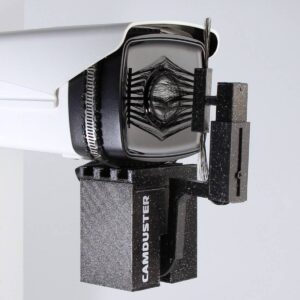
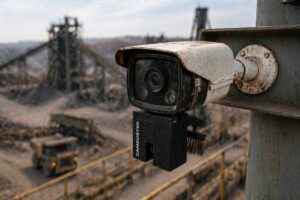
CAMDUSTER is a camera cleaning robot designed to help supported cameras stay clearer with less repeated manual intervention. In mining, that value can be especially important because reducing even a portion of repeat cleaning visits can improve maintenance efficiency.
Rather than relying only on reactive manual cleaning after image quality drops, mining operators can move toward a more preventive strategy.
CAMDUSTER can help support:
- fewer repeat cleaning trips
- better use of maintenance labor
- more consistent camera visibility
- lower burden on remote camera locations
- improved use of existing surveillance assets
- better planning for recurring contamination zones
Therefore, CAMDUSTER mining camera cleaning is often strongest where the environment keeps creating the same visibility problem again and again.
Where mining can benefit the most
Some mining camera locations create especially high cleaning cost and visibility risk.
Haul roads
These cameras often face constant dust exposure and large travel distances.
Remote gates and perimeter points
These are important for access monitoring, but they are often far from the main work area.
Conveyor and transfer routes
These zones can combine particulate, motion, and difficult access.
Elevated monitoring positions
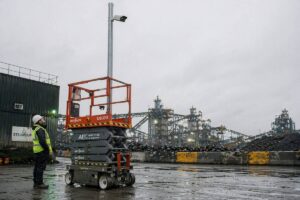
When a camera is mounted high in an isolated location, every cleaning visit becomes more complicated.
Loading and dumping areas
These positions often face repeated contamination from daily site activity.
Case study: repeat cleaning burden at a remote mining camera
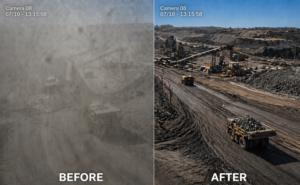
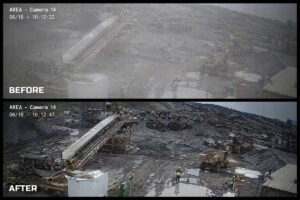
At one mining operation, a remote camera monitoring a haul-road junction repeatedly lost useful visibility due to dust buildup. The camera stayed online, but the footage gradually became less reliable for traffic monitoring and later review.
Initially, the site handled the problem with manual cleaning. However, each visit required technician travel, site coordination, PPE, and time away from other work. In addition, dust returned quickly during dry periods and heavy traffic cycles.
After reviewing the pattern, the team realized the biggest issue was not the act of cleaning itself. Instead, it was the repeated access cost tied to that same camera. By moving toward a more preventive maintenance approach, the site improved visibility consistency and reduced repeated service burden at that location.
That is where CAMDUSTER can deliver strong value in mining: not only by cleaning, but by reducing how often the site must keep solving the same problem manually.
Why mining may be the biggest win
Mining combines nearly every condition that increases cleaning burden and visibility risk. Dust is frequent. Access is costly. Cameras are spread across large areas. Meanwhile, surveillance visibility still matters for security, safety, and operations.
Because of that, mining may be one of the clearest examples of where a preventive camera cleaning solution can produce meaningful operational value.
If a site wants to reduce repeated manual intervention while keeping critical cameras more usable, mining is often the place where CAMDUSTER can make the biggest difference.
Internal resources to explore
Learn more here:
- CAMDUSTER camera cleaning solutions
- Mining: keeping critical cameras clear in dust-heavy zones
- Mining use case: remote cameras, expensive access
- The hidden cost of “free” manual camera cleaning
#CAMDUSTER #CameraCleaningRobot #DustRemoval #MiningOperations #OperationalEfficiency
FAQ
Why is mining a better use case than many other industries?
Mining often combines heavy dust, remote camera locations, costly access, and frequent repeat contamination. That makes camera cleaning more expensive and more operationally important than in many easier environments.
Is the biggest problem really the dust itself?
Not always. Dust creates the visibility problem, but the larger cost is often the labor, travel, PPE, access planning, and repeated site visits required to clean the same cameras again and again.
Which mining cameras usually create the highest maintenance burden?
Haul road cameras, remote gates, perimeter points, conveyor routes, loading areas, and elevated monitoring positions often create the highest cleaning burden because they combine contamination with difficult access.
Why do mining cameras lose visibility so quickly?
They are often exposed to haul road dust, transfer debris, wind-driven particulate, dry weather buildup, and general outdoor contamination. As a result, the lens area may not stay clear for long.
Can a mining camera still work even when the image is no longer very useful?
Yes. The camera may remain fully online and recording while the footage becomes too dusty, soft, or hazy for confident monitoring or review.
Why does access matter so much in mining?
Because cameras are often far from maintenance centers, mounted high, or installed in operationally sensitive areas. That means even a simple lens cleaning task can require significant time and coordination.
How does CAMDUSTER help in mining?
CAMDUSTER helps supported cameras stay clearer with less repeated manual intervention. In mining, this can reduce cleaning burden and support more consistent visibility in difficult locations.
Read more FAQs
Does CAMDUSTER mainly help with remote cameras?
Remote cameras are often one of the strongest use cases because every manual visit takes more time and effort. However, it can also help at busy dusty locations closer to the main site.
Why is mining ROI often stronger than expected?
Because the site is not only paying for cleaning. It is paying for travel, access, labor, coordination, and repeated returns. When those costs repeat across multiple cameras, the burden can grow quickly.
Can mining seasonality make the problem worse?
Yes. Dry seasons, increased traffic, and wind conditions can increase dust buildup and drive more frequent visibility loss on exposed cameras.
What happens when poor visibility is ignored too long?
The site may lose confidence in monitoring, miss useful visual detail, slow down incident review, and keep relying on footage that is technically recorded but less practical to use.
Does every mining camera need the same cleaning strategy?
No. Sites usually benefit from identifying which cameras suffer the most repeat contamination and which locations are the most expensive to service manually.
Why is preventive cleaning usually better than reactive cleaning in mining?
Reactive cleaning waits until the image has already degraded. Preventive cleaning aims to reduce that repeated drop in visibility before it creates more operational drag.
Can CAMDUSTER help improve the value of existing surveillance assets?
Yes. Keeping cameras clearer more consistently helps sites get more practical value from the surveillance systems they have already installed.
What is the main reason mining could be the biggest CAMDUSTER win?
Because mining combines recurring contamination with expensive access, large distances, and high operational dependence on useful camera visibility.