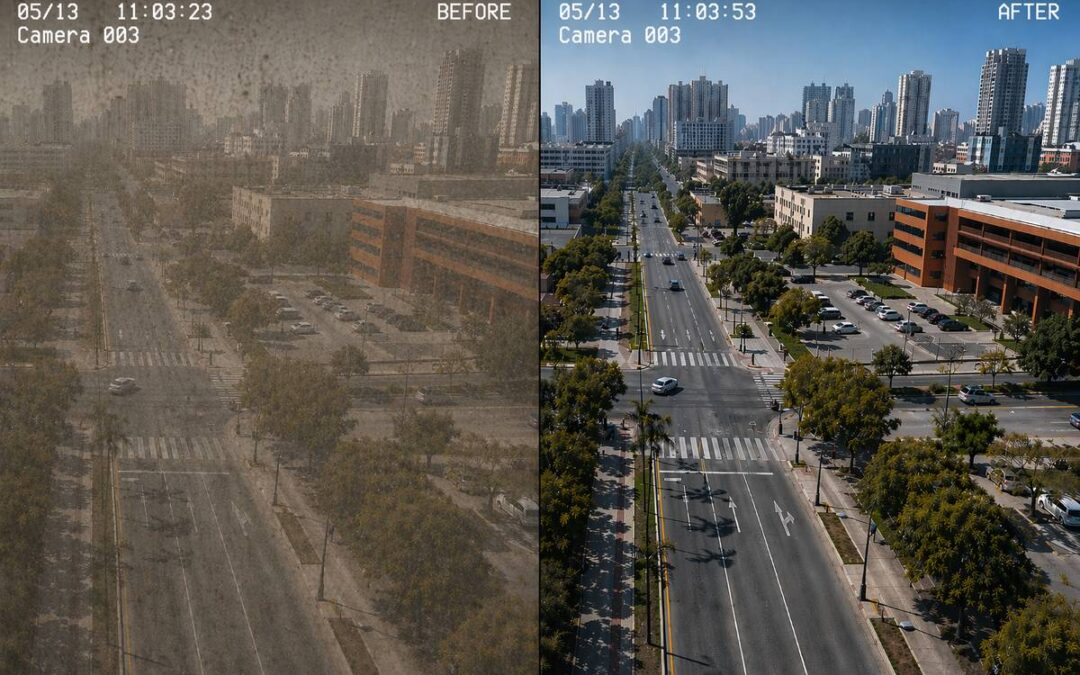
Outdoor city cameras: windblown dust and grime
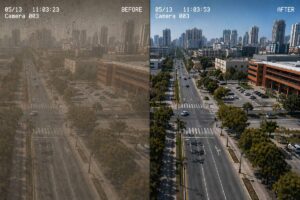
Outdoor city camera cleaning is often treated as a simple maintenance task. However, cameras installed in urban outdoor environments rarely stay clean for long. Windblown dust, road grime, pollution residue, and daily traffic exposure can all reduce image quality over time. As a result, city cameras may remain online while the footage becomes less useful than operators expect.
That matters because outdoor urban cameras are often used for traffic observation, public area monitoring, entry points, parking areas, building perimeters, and incident review. Therefore, outdoor city camera cleaning should be treated as a visibility and reliability issue, not just an occasional wipe-down.
Why city outdoor cameras get dirty so quickly
Urban environments may look less extreme than mining or heavy industry. Nevertheless, they create their own repeat contamination pattern.
For example, outdoor city cameras are often exposed to:
- windblown street dust
- traffic-related grime
- exhaust residue
- rain splash contamination
- construction dust
- seasonal pollen and debris
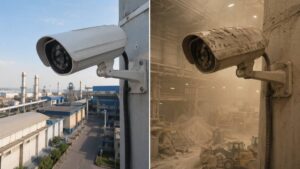
- cobweb buildup in sheltered mounting points
Because of this, the lens area can slowly lose clarity even when the camera itself remains fully operational.
Why the problem is often underestimated
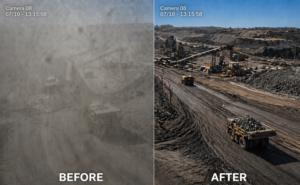
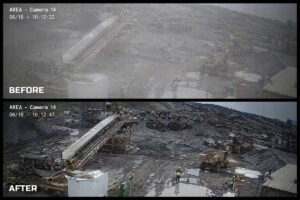
A camera does not have to fail to become less useful. In many cases, the image simply becomes softer, hazier, or dirtier over time.
That creates a hidden problem. Operators may still see live video, yet fine detail can be reduced. Consequently, the camera may provide less value for monitoring, review, or evidence support than intended.
This can affect:
- street-facing cameras
- city access points
- parking entrances
- building perimeter cameras
- cameras on poles and façades
- cameras overlooking sidewalks and shared public areas
So even routine contamination can turn into a recurring visibility issue.
Why wind and road activity make the problem worse
Wind is one of the main reasons outdoor city cameras do not stay clean. Dust and fine debris can be carried through the air and deposited repeatedly on exposed lens areas. At the same time, nearby roads add another layer of grime through vehicle movement, splash, soot, and surface residue.
As a result, a camera mounted in a city setting may be exposed to contamination every day without anyone noticing the decline immediately.
This is exactly why outdoor city camera cleaning becomes a repeat requirement instead of a one-time fix.
Why poor clarity creates a security problem
When city camera visibility drops, the result is not just a dirty lens. The larger issue is reduced usefulness.
For example, an outdoor camera may still be recording, but the image may become less effective for:
- identifying movement
- reviewing incidents
- observing entrances
- monitoring vehicle flow
- supporting security response
- confirming details after an event
Therefore, dirty optics can reduce the practical value of an otherwise functioning surveillance system.
Why manual cleaning often gets delayed
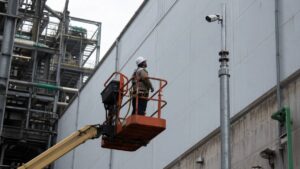
Many outdoor city cameras are mounted high on walls, poles, building corners, or roadside structures. Although the contamination itself may seem minor, accessing the camera can still take time, equipment, and planning.
In practice, manual cleaning may involve:
- technician scheduling
- travel between sites
- ladder or lift access
- traffic or pedestrian safety considerations
- repeated visits as contamination returns
Consequently, manual cleaning is often delayed until the image quality becomes obviously poor.
How CAMDUSTER helps with repeat outdoor contamination
CAMDUSTER is a camera cleaning robot designed to help supported cameras stay clearer with less repeated manual intervention. In outdoor city environments, this can support a more preventive approach to recurring visibility loss.
Instead of relying only on reactive maintenance after image quality drops, sites can reduce the burden of repeated manual cleaning on exposed cameras.
CAMDUSTER can help support:
- clearer optics over time
- fewer repeated cleaning visits
- better maintenance efficiency
- improved use of existing cameras
- more consistent outdoor visibility
- reduced cleaning burden at exposed urban locations
As a result, outdoor city camera cleaning becomes more manageable where windblown dust and grime keep returning.
Where this problem shows up most
Some outdoor city camera locations are more likely to suffer repeat contamination.
Roadside poles
These cameras often face traffic dust, splash, and wind exposure.
Building corners and façades
They can collect dirt, debris, and cobweb buildup while remaining difficult to access.
Parking area cameras
These positions may be exposed to exhaust, dust, and weather-related grime.
Public entry points
These locations depend on reliable visibility, yet the cameras are often mounted outside in open conditions.
Areas near construction or renovation
Temporary works can increase airborne dust and residue significantly.
Case study: a city parking entrance camera with repeat grime buildup
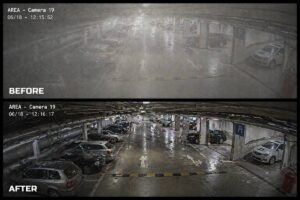
At one urban facility, a camera monitoring a parking entrance remained online and recording, yet the image quality declined over time due to windblown dust and road grime. The problem was gradual, so the footage still seemed usable at first. However, detail became less reliable during routine review.
Initially, the site handled the issue with manual cleaning. However, each visit required technician time, access equipment, and scheduling. In addition, contamination returned repeatedly because of constant vehicle activity and outdoor exposure.
After reviewing the pattern, the site recognized that the main problem was not one dirty lens event. Instead, it was the repeat maintenance burden tied to the same exposed camera. By moving toward a more preventive cleaning approach, the team improved visibility consistency and reduced repeated manual intervention.
That is where CAMDUSTER can create value for outdoor city cameras: by helping reduce the operational drag of repeat grime and dust buildup.
A smarter approach for outdoor city cameras
If you manage surveillance in exposed city environments, it is worth identifying which cameras lose clarity most often and which ones cost the most to maintain manually.
A stronger strategy usually includes:
- identifying exposed outdoor cameras with recurring contamination
- tracking repeat cleaning frequency
- reviewing access difficulty by location
- prioritizing cameras with the highest visibility importance
- reducing reactive maintenance where possible
In other words, the goal is not just to clean a lens once. The goal is to keep important outdoor cameras more usable with less repeated effort.
Internal resources to explore
Learn more here:
- CAMDUSTER camera cleaning solutions
- Parking garage: exhaust soot + cobwebs
- Storm season: dirt + debris on outdoor cameras
- Why cleaning is a security risk (missed events)
FAQ
Why do outdoor city cameras get dirty so often?
They are exposed to windblown dust, traffic grime, exhaust residue, rain splash, pollen, and general outdoor debris. Even if the buildup is gradual, image quality can decline over time.
Is this mainly a problem near roads?
Roads make the problem worse, but they are not the only cause. Cameras on building corners, parking areas, entry points, and exposed poles can all experience repeat contamination.
Can a city camera still work even when the image is already too dirty?
Yes. The camera can remain powered, connected, and recording while the footage becomes less useful because of haze, grime, and reduced optical clarity.
Why is manual cleaning often delayed?
Because many city cameras are mounted high on poles or building exteriors. Cleaning may require scheduling, travel, ladder or lift access, and safety planning around traffic or pedestrians.
What kind of contamination is most common on outdoor city cameras?
Common issues include fine dust, road splash residue, exhaust-related grime, cobwebs, pollen, and debris carried by wind or weather.
Which city cameras usually need the most attention?
Cameras near roads, parking entrances, exposed façades, public access points, and areas with nearby construction often face the highest repeat contamination burden.
How does CAMDUSTER help in city environments?
CAMDUSTER helps supported cameras stay clearer with less repeated manual intervention, which can improve maintenance efficiency and support more consistent visibility outdoors.
Read more FAQs
Does rain actually clean the lens?
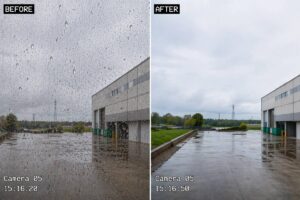
Not necessarily. Rain can leave spots, residue, splash marks, and streaking, especially when combined with dust, pollution, or nearby road contamination.
Why is gradual image decline so easy to miss?
Because the camera still appears operational. The image may slowly become softer or dirtier without triggering immediate attention unless someone compares the footage over time.
Can outdoor city cameras lose useful detail before anyone notices?
Yes. Fine visibility loss often happens gradually, which means the footage may already be underperforming before maintenance is requested.
Are parking and entry-point cameras especially sensitive to grime?
Yes. These locations often depend on consistent visibility, yet they are frequently exposed to vehicle movement, outdoor air, and repeated contamination.
Does construction activity nearby make outdoor camera cleaning more urgent?
Yes. Construction and renovation can add extra airborne dust and surface residue, causing faster image degradation on exposed cameras.
What is the main maintenance mistake with outdoor city cameras?
Waiting until the image becomes obviously poor. By that point, the camera may already have been delivering reduced value for some time.
Why is preventive cleaning better than reactive cleaning outdoors?
Because outdoor contamination often comes back repeatedly. A preventive approach helps reduce recurring visibility loss before it becomes a larger operational issue.
What makes outdoor city cameras a good use case for CAMDUSTER?
They often suffer repeat contamination in locations where manual cleaning takes time, effort, and repeated site visits.
#CAMDUSTER #CameraCleaningRobot #DustRemoval #BuildingManagement #PreventiveMaintenance