Cleaning the lens vs cleaning the surroundings: what really matters?
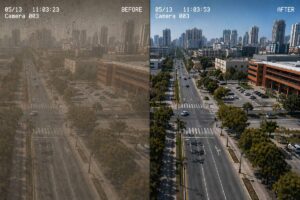
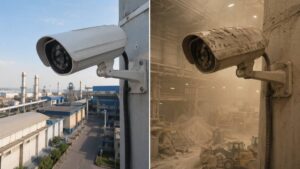
At first glance, a camera can look clean enough. The housing may be wiped down, the mount may look tidy, and nearby surfaces may seem free of dirt. However, that does not always mean the camera image is actually protected. The real issue is often the optic itself. That is why cleaning lens vs cleaning surroundings is an important distinction for any site that depends on usable surveillance footage.
In many environments, teams clean what is easiest to reach or what looks dirtiest from the outside. Nevertheless, a camera can still produce weak footage if fine dust, residue, cobwebs, or grime remain close to the lens area. Therefore, image quality depends less on how neat the installation looks and more on whether the viewing surface stays clear.
Why the difference matters
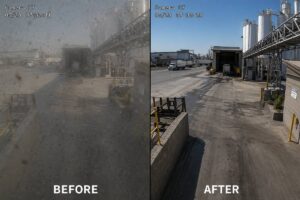
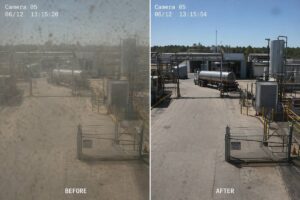
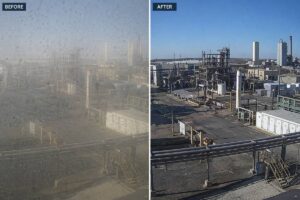
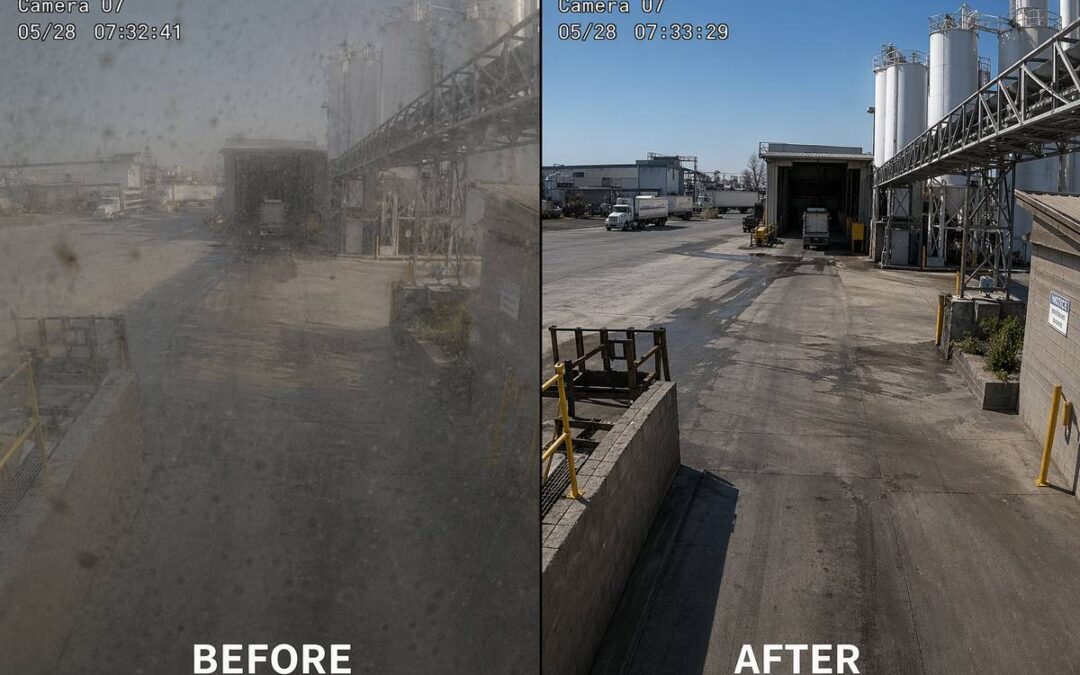
A surveillance camera does not record the condition of its housing. It records what the lens can see. So even when the surrounding bracket, enclosure, or pole is cleaned, the footage may still stay blurry, hazy, or low contrast if contamination remains where it affects the optic.
That is exactly where cleaning lens vs cleaning surroundings becomes operationally important. A camera may appear maintained, yet the recorded image can still lose practical value.
What counts as “cleaning the surroundings”
Cleaning the surroundings usually includes tasks such as:
- wiping the outer housing
- removing dirt from the mounting arm
- cleaning nearby brackets or covers
- clearing residue from the pole or wall area
- brushing away buildup around, but not directly at, the optic
These steps can improve the general appearance of the installation. In addition, they may reduce some future contamination. However, they do not automatically restore clear footage if the lens area is still affected.
What counts as “cleaning the lens”
Cleaning the lens means dealing with the contamination that directly affects image quality, especially at or near the camera’s viewing surface.
That may include:
- dust on the lens window
- cobwebs near the optic
- insect residue around the viewing area
- fine particulate causing haze
- water marks or grime on the lens cover
As a result, this type of cleaning has the most direct effect on what the camera actually captures.
Why sites often focus on the wrong area
Many teams naturally clean what they can see most easily from ground level. A dirty housing, dusty mount, or grimy bracket looks like an obvious maintenance issue. By contrast, fine contamination at the lens area may be less visible from below, especially on high-mounted cameras.
Consequently, the visible cleaning effort may not match the actual image problem. The camera looks better, but the footage may not improve much.
That is why cleaning lens vs cleaning surroundings should be evaluated based on image results, not just visual appearance from the outside.
Why the lens area creates the bigger risk
A small amount of contamination near the optic can create a surprisingly large image problem. This is especially true for:
- night monitoring
- IR-assisted cameras
- face recognition points
- LPR applications
- remote cameras
- cameras covering entrances or incident-prone areas
Even minor residue can reduce clarity where detail matters most. Therefore, a “mostly clean” camera may still be a weak security asset if the optic is not truly clear.
Why surrounding cleanliness still has value
Cleaning the surroundings is not useless. In fact, it can still support good maintenance by reducing the general dirt load around the camera and helping teams spot buildup early.
For example, surrounding cleaning can:
- improve overall equipment appearance
- reduce nearby dust accumulation
- remove material that may migrate toward the lens
- help identify recurring contamination patterns
However, it should support optic cleaning, not replace it. Otherwise, maintenance effort may go into the wrong result.
How CAMDUSTER helps address the real visibility issue
CAMDUSTER is a camera cleaning robot designed to help supported cameras stay clearer with less repeated manual intervention. That matters because the real goal is not only to keep the camera looking maintained. The goal is to keep the image usable.
Instead of relying entirely on manual visits that may focus on whatever is easiest to wipe, CAMDUSTER helps support a more consistent approach to keeping the lens area clear. As a result, sites can reduce repeated visibility loss tied to recurring contamination.
This is where cleaning lens vs cleaning surroundings becomes a practical decision. If the optic is the part that affects image quality most directly, then that is the part maintenance strategy should prioritize.
Where this distinction matters most
Some environments make this difference especially important.
Warehouses
Airborne dust from vehicle traffic can settle around the camera, but the real image loss often happens when fine particles affect the lens area.
Mining sites
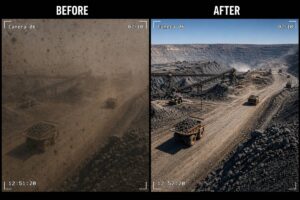
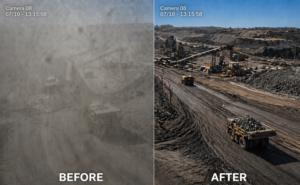
Heavy dust can coat the whole installation. However, the footage becomes unusable because the optic no longer sees clearly.
Outdoor cameras
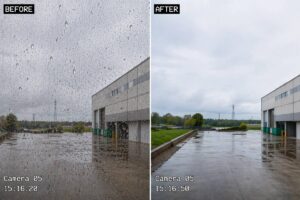
Rain spots, windblown residue, and grime may appear across the housing, yet the image problem is still centered at the viewing surface.
IR cameras
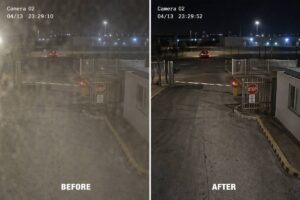
Insects and cobwebs may build around the front of the camera, creating glare and night visibility problems even when the rest of the unit seems acceptable.
Case study: clean-looking camera, poor-looking footage
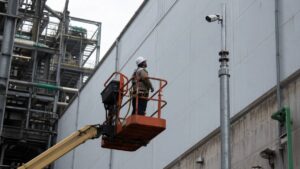
At one industrial site, a camera above an active traffic lane was cleaned regularly by maintenance staff. The outer housing, bracket, and nearby mounting area were wiped during routine checks, so from below the unit looked well maintained.
However, operators continued to report weak image quality, especially during lower-light periods. When the camera was inspected more closely, the issue became clear: fine residue and buildup near the lens area were still affecting visibility. In other words, the surroundings had been cleaned, but the part that actually influenced the footage had not been fully addressed.
After the site reviewed the pattern, the team recognized that appearance-based cleaning was not enough. A more targeted approach toward the optic made image quality more consistent and reduced repeated complaints.
That is exactly the kind of maintenance gap CAMDUSTER helps address.
A smarter maintenance approach
If a site wants better surveillance results, it should separate cosmetic cleaning from visibility-focused cleaning.
A stronger approach includes:
- checking actual image quality after cleaning
- prioritizing lens-area clarity over general appearance
- identifying cameras with recurring optic contamination
- reducing repeat manual cleaning where possible
- focusing effort on what changes the footage, not just the look
In other words, the goal is not simply to make the camera seem clean. The goal is to keep it visually effective.
Internal resources to explore
To learn more, see:
- Cobwebs at night: security camera cleaning
- Why IR attracts insects (and how that creates spider-web “factories”)
- Mining: keeping critical cameras clear in dust-heavy zones
- Warehouse use case: constant airborne dust from traffic
FAQ
If the camera housing looks clean, doesn’t that mean the image should be fine too?
Not necessarily. A camera can look clean from the outside while dust, residue, or cobwebs near the lens area still reduce image quality.
What matters more for footage quality: the lens or the outside of the camera?
The lens area matters more. Cleaning the housing may improve appearance, but cleaning near the optic has the most direct effect on what the camera records.
Can a small amount of dirt near the lens really make that much difference?
Yes. Even a small amount of contamination can soften details, reduce contrast, create haze, or worsen night visibility, especially on critical cameras.
Why do maintenance teams sometimes clean the wrong part first?
Because the housing, bracket, or surrounding area is easier to see and reach. The lens-area contamination may be less obvious from the ground, even though it affects the footage more.
Is cleaning the surroundings still useful?
Yes. It can reduce general buildup and help keep the installation tidy. However, it should support lens-focused cleaning, not replace it.
How can we tell whether our cleaning routine is working?
The best check is the image itself. If footage is still hazy, blurry, or low contrast after cleaning, the optic area may still be affected.
Why does this matter more at night?
At night, contamination near the lens can create glare, halos, and reduced contrast, especially on IR cameras. That makes lens-area cleanliness even more important.
Read more FAQs
Does this issue affect industrial sites more than office buildings?
Usually yes, because dust, debris, residue, and airborne particles are more common in industrial and high-activity environments.
Can surrounding dirt eventually become a lens problem too?
Yes. Dirt around the housing or mount can migrate toward the front of the camera over time, especially in windy, dusty, or high-traffic conditions.
What is the most common mistake in manual camera cleaning?
Assuming the job is done once the camera looks cleaner from the outside, without verifying whether the optic is actually clear.
How does CAMDUSTER fit into this problem?
CAMDUSTER helps supported cameras stay clearer by focusing maintenance where visibility matters most: at the lens area, not only around the installation.
Is this difference important for security investigations too?
Absolutely. A clean-looking camera is not enough if the footage still lacks the detail needed for incident review or identification.
#CAMDUSTER #LensCleaning #DirtyCameraLens #IndustrialSites #PreventiveMaintenance